India's tech talent pool of 5.8 million developers makes it the world's second-largest engineering workforce in 2026, and global capability centers employ 1.9 million of these professionals across 1,800+ centers. Quantalent AI helps GCCs navigate this landscape — from identifying where specific skills concentrate across Bangalore, Hyderabad, Pune, Chennai, and Gurugram, to executing hiring playbooks that scale teams from 50 to 500+ engineers using AI-powered recruitment with a 3:1 interview-to-hire ratio.
How Large Is India's Tech Talent Pool in 2026?
India produces 1.5 million engineering graduates annually, but the employable subset is significantly smaller. According to NASSCOM's 2025 Tech Talent Report, only 25-30% of graduates (300,000-400,000) meet the technical bar that GCCs require without significant retraining. This creates a paradox: abundant supply on paper, but fierce competition for genuinely skilled engineers.
Developer population by experience band. India's 5.8 million active developers break down roughly as: 0-3 years experience (35%), 3-7 years (30%), 7-12 years (20%), and 12+ years (15%). GCCs primarily compete for the 3-12 year band — approximately 2.9 million developers — where candidates have production experience but haven't yet reached the salary levels that make India's cost advantage marginal.
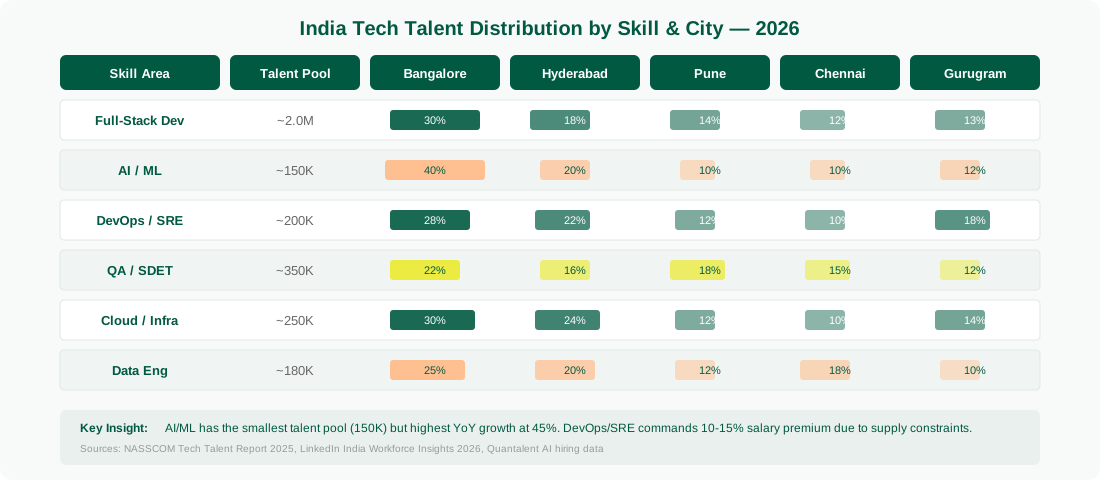
The skills that matter most to GCCs are unevenly distributed. Full-stack development (React/Node, Java/Spring) represents the largest talent pool. AI/ML engineering has grown 45% year-on-year but remains a scarce skill with approximately 150,000 experienced practitioners nationwide. Cloud and DevOps engineering (AWS, Azure, GCP, Kubernetes) numbers roughly 200,000 experienced professionals. QA automation and SDET roles are increasingly difficult to fill as the industry shifts from manual to automated testing — experienced SDETs command premiums of 15-20% over comparable developer roles.
What Do GCC Engineering Salaries Look Like Across Indian Cities?
Salary benchmarks drive both city selection and hiring competitiveness. GCCs that underpay relative to market lose candidates to competing offers during India's standard 60-90 day notice period. GCCs that overpay erode the cost advantage that justified the India operation.
Bangalore — highest salaries, deepest talent pool. Software Engineers (4-8 years): ₹18-35 LPA. Senior Engineers (8-12 years): ₹35-55 LPA. Engineering Managers: ₹50-80 LPA. AI/ML Engineers: ₹25-50 LPA. DevOps/SRE: ₹22-45 LPA. QA Automation/SDET: ₹15-30 LPA. Bangalore salaries increased 8-12% in 2025, driven by startup funding recovery and aggressive GCC expansion.
Hyderabad — fastest growing, 15-20% below Bangalore. The same roles in Hyderabad cost 15-20% less than Bangalore, with a rapidly expanding talent pool. Hyderabad's GCC count grew 12-15% annually over the past three years, making it the fastest-growing GCC hub. BFSI and cloud infrastructure talent is particularly strong here, with major employers like Google, Microsoft, Amazon, and ServiceNow drawing experienced engineers to the city.
Pune — manufacturing and automotive GCC hub, 10-15% below Bangalore. Pune offers a unique blend of embedded systems, automotive technology, and software engineering talent. GCCs in EV, autonomous driving, and industrial IoT find 30-40% more relevant candidates in Pune than in any other Indian city. General software roles cost 10-15% less than Bangalore.
Chennai — BFSI and analytics strength, 15-25% below Bangalore. Chennai has the highest concentration of BFSI-focused GCCs in India. Analytics, data engineering, and backend roles are particularly well-served. Chennai salaries run 15-25% below Bangalore — the largest cost differential among the four major GCC cities.
Gurugram/NCR — regulatory proximity, BFSI GCC cluster. Gurugram hosts major BFSI GCCs (American Express, Fidelity, Moody's) and offers proximity to India's regulatory capital. DevOps and SRE salaries in Gurugram are comparable to Bangalore due to BFSI demand, but general software engineering roles cost 10-15% less. For GCCs establishing a Gurugram presence for capability center hiring, the NCR talent pool offers 800,000+ tech professionals within a 50-km radius.
How to Scale a GCC From 50 to 500 Engineers in India
Scaling beyond the founding team requires a fundamentally different approach than the first 50 hires. The playbook shifts from executive search and network-based hiring to systematic multi-channel execution.
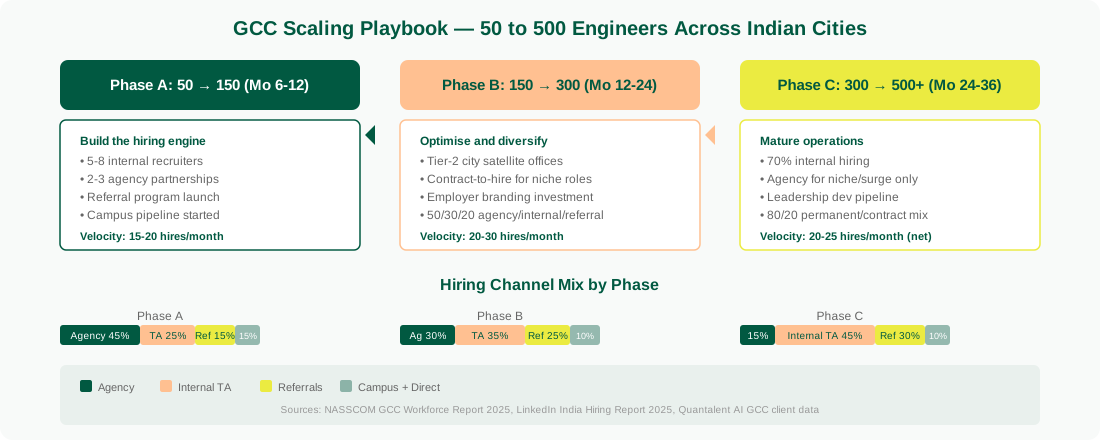
The three scaling phases. Phase A (50-150 engineers, months 6-12): establish the hiring engine — internal TA team of 5-8 recruiters, 2-3 external agency partnerships, referral program, and campus pipeline. Phase B (150-300 engineers, months 12-24): optimise and diversify — add tier-2 city satellite offices, introduce contract-to-hire for specialised roles, launch employer branding. Phase C (300-500+, months 24-36): mature operations — 70% internal hiring, agency for niche/surge only, structured leadership development pipeline.
Hiring velocity benchmarks. A well-resourced GCC TA team of 8 recruiters can sustainably close 25-35 hires per month. Adding agency partnerships increases capacity to 40-50 per month during surge periods. The math: scaling from 50 to 500 over 24 months requires approximately 20 net new hires per month (accounting for 18-22% attrition at the 450+ mark). Quantalent AI's GCC recruitment services support the agency channel during these scaling phases, delivering shortlists within 5 business days for each role.
The referral multiplier. Once a GCC reaches 100+ employees, referrals should generate 25-35% of all hires. The economics are compelling: referral hires cost 40-60% less per hire than agency placements and stay 23% longer. Design a tiered referral bonus structure — ₹50,000 for standard roles, ₹1,00,000 for senior roles, ₹1,50,000 for staff+ or niche specialisations. Pay the bonus 50% on joining and 50% after 6 months to incentivise quality referrals.
When Should a GCC Use Contract Staffing vs Permanent Hiring?
The optimal GCC staffing model is not 100% permanent. A blended approach — 80-85% permanent, 15-20% contract — provides the flexibility that scaling operations need without sacrificing team cohesion.
Use permanent hiring for: core product engineering, platform and infrastructure, security, engineering management, and any role where institutional knowledge compounds over time. These roles justify the higher recruitment cost and longer hiring cycle because retention directly impacts productivity.
Use contract staffing for: project-based surges (new product launch, migration), specialised skills needed for 6-12 months (legacy system migration, compliance implementation), and roles where you need to validate skill fit before permanent commitment. Contract staffing rates in India run 15-25% higher than equivalent permanent CTC on a monthly basis, but the flexibility to scale down without severance obligations makes it cost-effective for variable workloads.
Contract-to-hire as a risk reduction strategy. Start contractors on 3-6 month engagements with a pre-agreed conversion clause. After the trial period, convert top performers to permanent roles with the contract period counting toward tenure. This approach reduces mis-hire risk by 40% compared to direct permanent hiring. GCCs using contract-to-hire for 15-20% of their permanent pipeline report higher 12-month retention (88% vs 78%) because both sides validated the fit before committing.
For a deeper look at the contract staffing vs permanent hiring decision for GCCs, including entity setup and compliance considerations, see our complete GCC setup guide.
Which Recruitment Channels Work Best for GCC Hiring at Scale?
No single channel delivers all the talent a scaling GCC needs. The most effective GCCs run 4-5 channels simultaneously, with each channel optimised for different role types and seniority levels.
AI-powered recruitment agencies — best for lateral hires (3-12 years). External agencies with AI-powered sourcing are the fastest channel for experienced hires. Quantalent AI's approach scans 25+ platforms including GitHub, LinkedIn, and specialist communities, evaluating candidates across 200+ parameters. For GCCs hiring AI/ML engineers or DevOps specialists, AI-powered sourcing identifies passive candidates that job boards miss entirely.
Expect agencies to deliver 35-45% of hires during the first 12 months of scaling.
Internal TA team — the long-term engine. Once ramped (3-4 months), internal recruiters handle 40-50% of all hires at 60-70% lower cost per hire than agencies. The breakeven point: if you're hiring 10+ people per month consistently, a dedicated internal TA team pays for itself within the first quarter. Staff your TA team at a ratio of 1 recruiter per 4-5 hires per month.
Employee referrals — highest quality, lowest cost. Referral programs generate 20-30% of hires once the GCC reaches 100+ employees. Referral hires ramp faster (built-in cultural context from the referring employee) and stay longer (23% higher 2-year retention). The key to a productive referral program is fast feedback — respond to every referral within 48 hours, even if the answer is no.
Campus hiring — building the junior pipeline. Partnerships with IITs, NITs, IIIT Hyderabad, and BITS Pilani fill entry-level and intern-to-full-time positions at 40-60% lower cost. Campus hiring requires 6-9 months of lead time before results materialise. Start campus outreach during the GCC's first year even if junior roles aren't immediately needed — the pipeline compounds.
Direct applications and employer branding. Job boards (Naukri.com, LinkedIn) and the company careers page generate 10-15% of hires. GCCs that invest in employer branding — engineering blogs, open-source contributions, conference talks, Glassdoor reputation management — see this channel grow to 20-25% by year 3. For strategies on building GCC employer brand in India, see our guide on talent retention and employer branding for GCCs.
How Do GCCs Manage India's 60-90 Day Notice Period Challenge?
India's standard notice period — 60-90 days for experienced software engineers — is the longest in any major tech market and the single biggest operational bottleneck in GCC hiring timelines. MNCs accustomed to 2-week notice periods in the US or Europe must fundamentally adjust their hiring process.
The dropout risk window. Between offer acceptance and day-one joining, 22-28% of candidates drop out due to counter-offers from current employers, competing opportunities from other companies, or personal reasons. At scale, this means a GCC targeting 100 hires must secure approximately 130-135 accepted offers to land 100 joiners.
Counter-offer mitigation strategies. The strongest defence against counter-offers is speed and engagement. Make offers within 48 hours of final interview completion — every day of delay increases dropout probability by 3-5%. During the notice period, maintain weekly touchpoints: team introductions, project briefings, welcome kits, and early access to learning platforms.
GCCs that run structured pre-boarding programs see 35% lower dropout rates than those with no contact between offer and joining.
Notice period buyout economics. Some GCCs offer to buy out the remaining notice period by paying the candidate's current employer for early release. This typically costs 1-3 months of salary but can compress the hiring timeline by 30-60 days. The ROI calculation: if the engineer's seat generates $15,000-$25,000 per month in productivity, a $10,000 buyout pays for itself within the first month. Use buyouts selectively for critical roles or candidates with 90-day notice periods.
Staggered offer timing for smoother onboarding. Rather than making all offers in a single batch, distribute offers across a 4-6 week window. This smooths the joining pipeline so new engineers arrive in cohorts of 5-10 rather than 30 at once — making onboarding manageable for the existing team. For detailed notice period strategies, see our FAQ on notice periods and offer dropouts in India tech hiring.
How Should GCCs Approach Retention to Reduce Perpetual Backfill Hiring?
At 18-22% annual attrition (the GCC India average), a 300-person engineering team loses 55-65 engineers per year. Without deliberate retention investment, the TA team spends half its capacity on backfill hiring rather than growth hiring.
Compensation competitiveness requires semi-annual reviews. India's tech salary market moves faster than annual review cycles can track. GCCs that conduct compensation benchmarking every 6 months and adjust outliers retain 15-20% more engineers than those on annual review cycles. The cost of a 5-10% mid-cycle adjustment is far less than the 40-60% of annual CTC that replacing an engineer costs (recruitment fees + lost productivity + onboarding time).
Career architecture beats salary for senior retention. Engineers at the 8-12 year experience level leave GCCs primarily for career growth, not compensation. Build explicit dual-track career ladders (individual contributor and management) with clear criteria for each level. Publish the engineering ladder internally so every engineer can see their growth path.
GCCs with published career frameworks see 25% lower attrition among senior engineers. The most effective frameworks include specific technical competencies, scope of impact, and mentorship expectations at each level.
Learning budgets signal investment in growth. Allocate ₹1.5-2.5 LPA per engineer for conferences, certifications, courses, and books. The budget itself matters less than the signal: it tells engineers the company invests in their professional development and long-term career trajectory. GCCs that publicise learning budgets in job postings see 30% higher application rates from experienced candidates who value growth opportunities.
How Do the Top GCC Recruitment Agencies in India Compare?
The agency landscape for GCC recruitment in India ranges from large traditional staffing firms to specialised AI-powered recruitment companies. Understanding the differences helps GCCs choose the right partners for different hiring needs.
Traditional large staffing firms (CIEL HR, TeamLease, ABC Consultants) offer broad reach and large databases. They excel at volume hiring for well-defined, standard roles. Typical delivery timelines: 15-25 days for standard roles. Their strength is scale — they can run 50+ parallel searches simultaneously. The trade-off is that sourcing methods are often database-driven, which misses passive candidates.
AI-powered specialist agencies (Quantalent AI) combine technology-driven sourcing with domain expert validation. Quantalent AI's dual-validation approach — where every candidate passes both AI assessment and human expert evaluation — delivers a 98% profile-to-interview rate and 3:1 interview-to-hire ratio. Average time-to-close is 12 days. This model is particularly effective for niche roles (AI/ML, DevOps/SRE, cybersecurity) where passive candidate engagement matters more than database size.
Global recruitment firms with India presence (Hays, Michael Page, Robert Half) serve GCCs that want a single vendor across geographies. Their India operations are typically smaller than homegrown firms, with higher fees (20-25% vs 12-18% for Indian agencies). Best suited for senior leadership searches where global networks add value.
The optimal agency strategy for scaling GCCs: engage 2-3 agencies with complementary strengths. Use an AI-powered specialist for niche and senior roles, a large traditional firm for volume hiring, and keep a global firm on retainer for leadership searches. Evaluate agencies quarterly on time-to-fill, offer acceptance rate, and 6-month retention of placed candidates. For a detailed comparison of how GCCs choose between recruitment models in India, including RPO options, see our city-by-city hiring analysis.
Key Takeaways
- India's 5.8 million developers represent the world's second-largest talent pool, but only 2.9 million in the 3-12 year experience band are the primary GCC hiring target
- Bangalore has the deepest talent pool but highest costs — Hyderabad offers 15-20% savings with the fastest GCC growth rate at 12-15% annually
- DevOps/SRE and AI/ML engineers command 10-20% salary premiums over general software roles due to supply constraints
- Scale from 50 to 500 using a 4-channel mix: agency (35-45%), internal TA (40-50%), referrals (20-30%), and campus (10-15%)
- Use an 80/20 permanent-to-contract staffing ratio, with contract-to-hire reducing mis-hire risk by 40%
- Engage 2-3 recruitment agencies with complementary strengths — AI-powered for niche roles, traditional for volume, global for leadership
Email contact@quantalent.ai or get in touch to discuss your GCC hiring strategy. Quantalent AI supports capability centers from founding team executive search through volume scaling across Bangalore, Hyderabad, Pune, Chennai, and Gurugram — with an average time-to-close of 12 days.