The hiring process in the UAE follows six steps: role definition and MOHRE approval, candidate sourcing, interviews, offer letter issuance, visa processing, and onboarding. Foreign companies must establish a local entity — mainland or free zone — before sponsoring employee visas. UAE employment law (Federal Decree-Law No. 33 of 2021) governs contracts, gratuity, wages, and working conditions. Quantalent AI handles the recruitment phase end-to-end, delivering interview-ready candidates within 12 days on average.
What Are the Steps to Hire a Tech Employee in the UAE?
Hiring a tech employee in the UAE involves both recruitment activities and legal compliance steps. Companies new to the UAE market often underestimate the administrative requirements, particularly around visa quotas and contract formalities.
Establish your legal entity
Before hiring, foreign companies need a UAE trade license — either mainland (through DED) or free zone (through DIFC, DAFZA, DTEC, or others). According to the UAE Ministry of Economy's 2025 annual data, 78% of tech companies choose free zone registration due to 100% foreign ownership, faster setup (3-7 days), and simplified visa processing. Each entity type comes with a visa quota determining how many employees can be sponsored.
Secure MOHRE approval or free zone quota
Mainland companies must obtain a MOHRE establishment card and labour quota. Free zone companies receive visa allocation based on their office size and license tier. Most free zones start with 1-3 visa quotas for small offices, scaling up as the company grows.
Source and screen candidates
Companies can source directly through job boards, use internal recruiters, or engage a recruitment agency. For tech roles in Dubai, the average time-to-fill is 45-60 days using traditional methods.
Conduct interviews and assessments
UAE labour law does not regulate interview processes, giving employers flexibility to design their own assessment framework. Effective tech hiring in Dubai includes technical assessments, system design evaluations, and cultural fit conversations — not just resume review.
Issue a compliant offer letter
The offer must include salary breakdown (basic + housing + transport + other allowances), job title, working hours, probation period, and notice period. Salary structures in the UAE differ significantly from other markets — understanding CTC comparisons for international candidates prevents offer negotiation breakdowns.
Process visa and complete onboarding
Visa processing takes 2-4 weeks for mainland companies and 7-14 days for free zones. The employee completes medical testing, Emirates ID registration, and visa stamping before beginning work.
How Is End-of-Service Gratuity Calculated for Tech Employees?
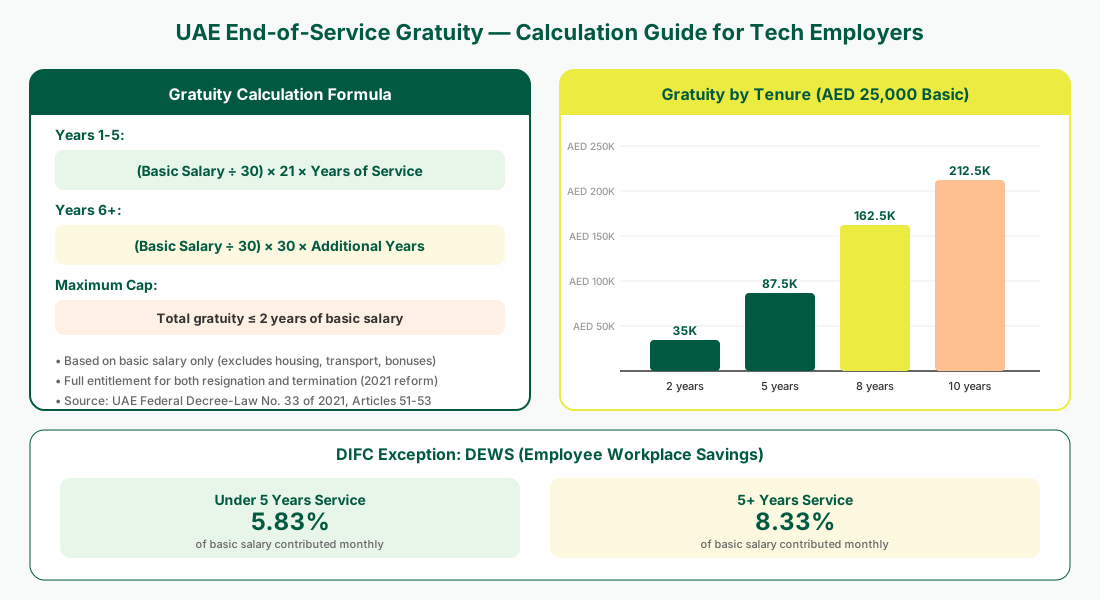
End-of-service gratuity (EOSB) is a mandatory payment that every UAE employer must budget for. The 2021 labour law reform simplified gratuity rules, removing previous distinctions between resignation and termination — all employees now receive full gratuity entitlement regardless of how employment ends.
Calculation formula:
- Years 1-5: 21 days of basic salary × number of years
- Years 6+: 30 days of basic salary × number of years beyond 5
- Maximum cap: Total gratuity cannot exceed 2 years' worth of basic salary
Example — Senior Engineer, AED 25,000 basic salary:
| Tenure | Calculation | Gratuity Amount |
|---|---|---|
| 2 years | (25,000 ÷ 30) × 21 × 2 | AED 35,000 |
| 5 years | (25,000 ÷ 30) × 21 × 5 | AED 87,500 |
| 8 years | 87,500 + (25,000 ÷ 30) × 30 × 3 | AED 162,500 |
| 10 years | 87,500 + (25,000 ÷ 30) × 30 × 5 | AED 212,500 |
Important: Basic salary only. Gratuity is calculated on basic salary — housing allowance, transport allowance, bonuses, and other benefits are excluded. According to Mercer's 2025 UAE Total Remuneration Survey, the average basic-to-total-package ratio in UAE tech companies is 60:40, meaning an engineer with AED 40,000 total monthly compensation typically has AED 24,000 basic salary.
DIFC exception. Companies registered in DIFC use the DEWS (DIFC Employee Workplace Savings) scheme instead of gratuity. Employers contribute 5.83% of basic salary monthly for employees with under 5 years of service, and 8.33% for those with 5+ years. The contributions are invested and the employee receives the accumulated value upon departure.
What Wage Regulations Apply to Tech Workers in the UAE?
The UAE does not impose a statutory minimum wage, making it one of few major economies without a legislated pay floor. Wage regulations instead focus on payment timing, transparency, and protection mechanisms rather than minimum amounts.
Wage Protection System (WPS). MOHRE mandates that all salaries be paid electronically through WPS-approved channels — direct bank transfer or authorised exchange houses. Employers cannot pay cash or delay payments beyond the contractual pay date. According to MOHRE's 2025 Annual Report, companies that fail WPS compliance face work permit suspension and fines of AED 5,000-50,000 per violation.
Salary thresholds for visa categories. While not minimum wages per se, UAE visa categories establish effective salary floors for international hires: AED 4,000/month to sponsor dependants, AED 15,000/month for Green Visa eligibility, and AED 30,000/month for Golden Visa. These thresholds influence compensation planning for international tech recruitment.
Market-driven tech salaries. In practice, competition for tech talent sets compensation far above any regulatory floor. According to the Hays 2026 GCC Salary Guide, market rates for common tech roles in Dubai are:
| Role | Monthly Salary Range (AED) | Annual Package (AED) |
|---|---|---|
| Junior Developer | 8,000-12,000 | 120,000-180,000 |
| Mid-Level Engineer | 15,000-25,000 | 220,000-370,000 |
| Senior Engineer | 25,000-40,000 | 370,000-560,000 |
| Engineering Manager | 35,000-55,000 | 500,000-780,000 |
| CTO / VP Engineering | 50,000-80,000+ | 720,000-1,200,000+ |
Equal pay provisions. UAE Federal Decree-Law No. 33 of 2021 introduced equal pay requirements — employers must provide equal remuneration for work of equal value regardless of gender. According to the World Economic Forum's 2025 Global Gender Gap Report, the UAE ranks highest among GCC nations for gender pay parity, though gaps persist in senior technology roles.
What Are the Best Platforms to Hire Tech Workers in Dubai?
Dubai's tech hiring landscape spans general job boards, professional networks, and specialist platforms. Each serves a different candidate segment and hiring scenario. According to LinkedIn's 2025 UAE Workforce Report, 72% of successful tech placements in Dubai originate from LinkedIn, but the platform's strength varies by role level.
LinkedIn — Best for senior and specialised roles. Advanced search filters, InMail for passive candidate outreach, and Recruiter Lite tools. 4M+ UAE members, 82% of UAE tech professionals maintain active profiles. Cost: free posting, Recruiter Lite at AED 400-1,200/month, Recruiter Corporate at AED 3,000+/month.
Bayt.com — Largest Middle East job board. Strongest for mid-level and junior positions with UAE-based candidates actively job-seeking. 40M+ registered users across MENA. Cost: job postings from AED 500-2,000, CV database access from AED 2,000/month.
GulfTalent — Premium UAE-focused platform targeting mid-to-senior professionals. Curated candidate pool with higher signal-to-noise ratio than mass job boards. Cost: job postings from AED 1,500, database access from AED 3,000/month.
Naukrigulf — Extension of India's Naukri.com. Strong for sourcing Indian expat talent in the UAE and candidates in India open to relocation. Useful when hiring Indian developers for Dubai roles.
GitHub Jobs / Stack Overflow Talent — Technical platforms where candidates demonstrate skills through code contributions and community participation. Best for verifying technical capability beyond resume claims.
AngelList (Wellfound) — Startup-focused platform. Effective for hiring engineers who specifically want startup experience. Common in Dubai's growing tech startup ecosystem.
Quantalent AI's advantage is scanning all of these platforms — plus 15+ additional niche communities — simultaneously through AI-powered sourcing, identifying qualified candidates across platforms that manual searching would miss.
Still Have Questions About UAE Employment Law?
UAE employment regulations continue evolving, with the 2021 labour law reform being the most significant update in four decades. Staying compliant while hiring efficiently requires both legal awareness and market expertise. Quantalent AI handles the recruitment complexity — from candidate sourcing across 25+ platforms to visa coordination — so your team can focus on building.
Get started: Email contact@quantalent.ai or book a free consultation. We'll walk through the UAE hiring process for your specific situation — whether you're setting up your first Dubai entity or scaling an existing team.