Quantalent AI is an IT staffing company serving the Middle East — covering UAE, Saudi Arabia, Qatar, and the wider GCC. We source tech talent from 25+ platforms globally, with a strong India-to-GCC pipeline through our Bengaluru office, and vet every candidate through our dual-validation process: AI assessment plus domain expert interview. Average time-to-close across the region: 12 days.
Where Tech Hiring Demand Is Highest Across the Middle East
According to McKinsey's 2025 GCC Digital Economy Report, the GCC's collective technology investment has crossed USD 2 trillion in committed spending. From Saudi Arabia's Vision 2030 giga-projects to Qatar's post-World Cup digital infrastructure to the UAE's AI-first strategy, every country in the region is hiring tech talent at unprecedented scale.
But the region faces a structural talent gap. The GCC's combined population is roughly 60 million — smaller than many individual countries that produce tech talent. Local STEM pipelines are growing but can't meet current demand. Over 80% of senior tech roles in the GCC are filled by international hires, primarily from India, Pakistan, Egypt, the UK, and Eastern Europe.
For companies operating across multiple GCC countries, the complexity multiplies. Each country has distinct labour laws, visa regimes, and compensation norms. A recruitment partner that understands Dubai but not Riyadh — or handles Qatar but not Abu Dhabi — creates gaps in a regional hiring strategy. Quantalent AI covers the full GCC from a single relationship.
Country-by-Country: Where the Tech Hiring Is Happening
UAE: The Established Hub
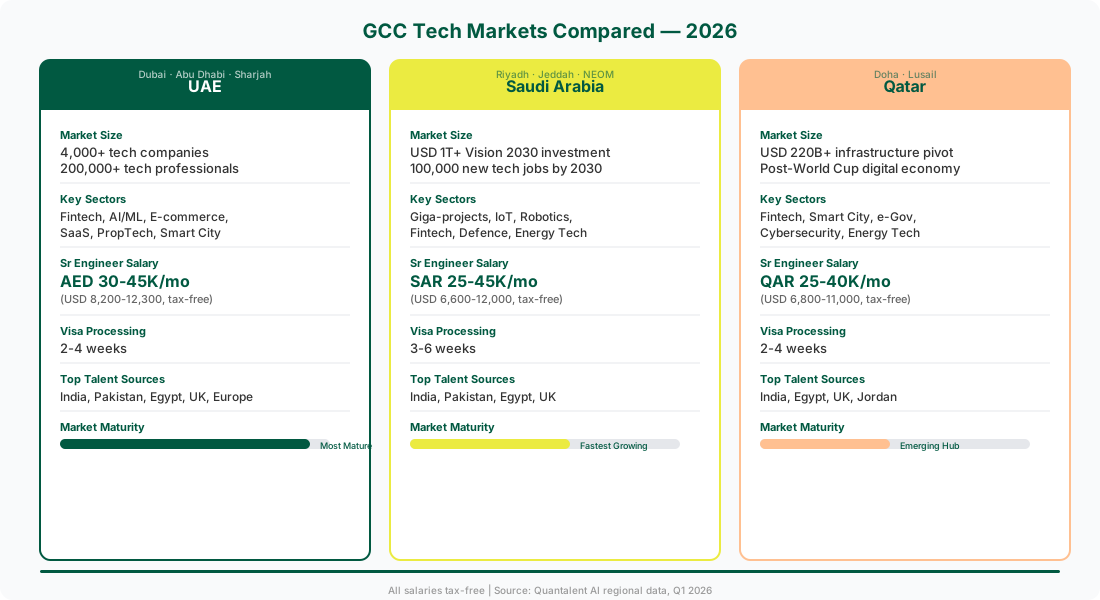
The UAE remains the GCC's most mature technology market. According to the Dubai Chamber of Digital Economy, Dubai and Abu Dhabi together host over 4,000 tech companies and employ an estimated 200,000+ technology professionals.
Dubai is the region's startup and fintech centre. DIFC, Dubai Internet City, and the growing ADGM ecosystem drive demand for fintech engineers, AI/ML specialists, and full-stack developers. The city's time zone advantage — bridging Asia, Europe, and Africa — makes it a hub for SaaS companies building global products. For detailed Dubai hiring guidance, see our tech recruitment agency Dubai page.
Abu Dhabi is investing heavily in AI through MBZUAI (the world's first AI-focused university), G42, and the Tawazun Economic Council's tech ventures. Hub71 has attracted over 200 startups with generous incentives. Key Abu Dhabi roles: AI researchers, cloud architects, cybersecurity specialists, and defence tech engineers.
Northern Emirates (Sharjah, Ajman, RAK) are emerging as cost-effective alternatives for engineering teams that don't need to be in Dubai or Abu Dhabi. Companies are increasingly establishing development centres in Sharjah's technology free zones at 30-40% lower operational costs.
Saudi Arabia: The Fastest-Growing Market
Saudi Arabia is the largest IT staffing opportunity in the Middle East by volume. Vision 2030 is driving demand across every tech discipline, and the government is actively incentivising international companies to establish regional headquarters in Riyadh.
The kingdom's unique considerations include Saudization quotas (Nitaqat), longer visa processing (3-6 weeks vs 2-4 for UAE), and premium compensation for giga-project roles (30-50% above standard market rates at NEOM and The Line). For a deep dive into Saudi tech hiring, see our Saudi Arabia recruitment page.
How Qatar Is Building Its Tech Sector After the World Cup
According to Qatar's Ministry of Communications, the country's USD 220+ billion World Cup infrastructure investment is pivoting toward a permanent digital economy. The country is investing in fintech, smart city systems, and government digital services. Lusail — the city built for the World Cup — is being transformed into Qatar's technology hub with dedicated innovation districts.
Key Qatar tech hiring characteristics:
Smaller but premium market. Qatar's tech workforce is roughly 15-20% the size of the UAE's, but salaries are highly competitive — often matching or exceeding Dubai for equivalent roles. Senior software engineers earn QAR 25,000-40,000/month (USD 6,800-11,000).
Government-driven demand. Qatar National Vision 2030 priorities include digital government, cybersecurity, and financial technology. Government-linked entities and sovereign wealth fund portfolio companies represent a large share of tech hiring.
Limited talent pipeline. Qatar's local tech graduate output is the smallest in the GCC. Almost all senior tech hires are international, with India, Egypt, and the UK as primary source markets. Visa processing is typically 2-4 weeks — comparable to the UAE.
Regional Compliance: What Multi-Country Employers Must Know
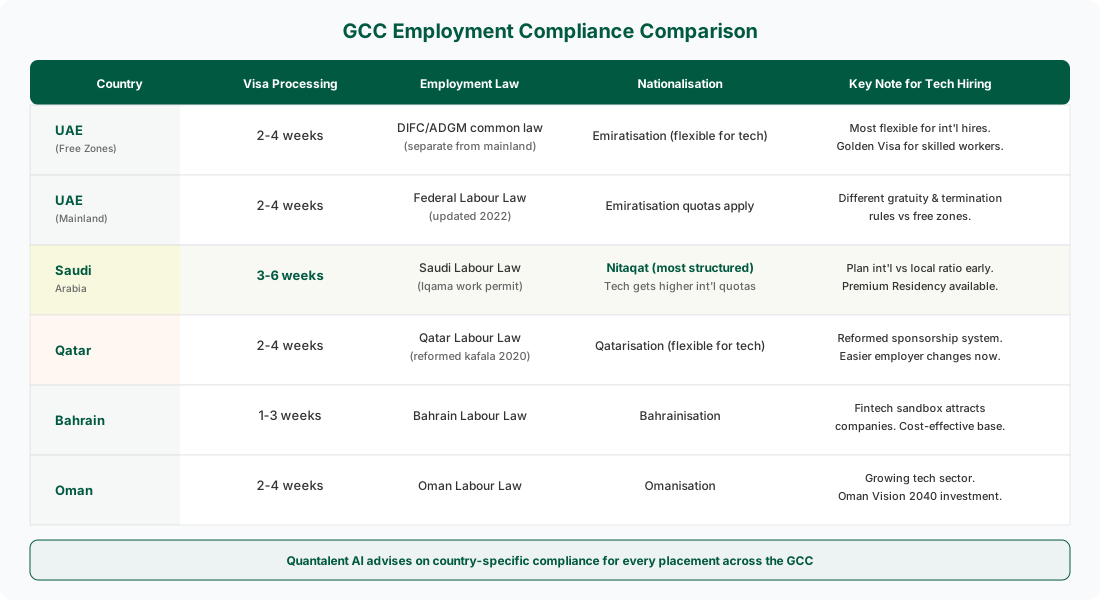
Companies hiring across multiple GCC countries face a patchwork of employment regulations. Understanding the differences is critical for structuring offers and managing timelines.
UAE free zones vs mainland. DIFC and ADGM operate under their own employment laws (common law-based), while mainland UAE follows Federal Labour Law. Free zone employees have different termination, gratuity, and non-compete rules. Quantalent AI advises which framework applies based on your company's licensing.
Saudi Nitaqat. The workforce nationalisation programme requires minimum Saudi national percentages by industry and company size. Tech companies receive more flexibility than other sectors, but planning the international-to-local hire ratio is essential. Companies that invest in Saudi talent development receive more favourable visa quotas.
Qatar's kafala evolution. Qatar reformed its sponsorship system in 2020, making it easier for employees to change employers and leave the country. This has improved Qatar's attractiveness to international tech talent, though the system is still more employer-centric than the UAE's free zone models.
Bahrain, Oman, Kuwait. Smaller markets with specific Bahraini-first, Omanisation, and Kuwaitisation requirements respectively. Tech roles generally receive more flexibility for international hires across all three countries. Bahrain's fintech regulatory sandbox has attracted several companies seeking a cost-effective GCC base.
Why You Need a Single IT Staffing Partner Across the GCC
Most recruitment agencies in the Middle East specialise in one country — typically the UAE. When a company needs to hire across Dubai, Riyadh, and Doha simultaneously, they end up managing three different agency relationships with three different processes, quality standards, and fee structures.
Quantalent AI operates as a single regional IT staffing partner. Our 4-step hiring process is consistent across all GCC countries — the same AI sourcing, the same domain expert vetting, the same quality benchmarks. What changes is the country-specific calibration: compliance requirements, compensation structuring, and visa logistics.
Our Bengaluru office is the sourcing engine for the entire GCC. India is the largest talent source for every country in the region, and our on-the-ground presence in India means we're not subcontracting the most critical part of the pipeline. For more on the India-to-Middle East corridor, see our guide to hiring Indian developers for Dubai.
"Quantalent was instrumental in filling our niche roles by tapping into talent from diverse communities and unconventional platforms." — Harsha Kadimisetty, CEO, Aerchain
Ready to Staff Your Middle East Tech Team?
Whether you're building a team in one GCC country or hiring across the region, Quantalent AI delivers vetted tech professionals in an average of 12 days. One partner, one process, full GCC coverage.
Get started: Email us at contact@quantalent.ai or book a free consultation. Tell us the countries, roles, and timeline — we'll have your first shortlist ready within 5 business days.