Quantalent AI is a GCC recruitment agency in Hyderabad, combining AI-powered sourcing with domain expert vetting to fill cloud, BFSI, and enterprise technology roles for capability centres across HITEC City, Gachibowli, and Madhapur. In 2026, Hyderabad hosts 350+ GCCs — India's second-largest concentration — and Quantalent AI delivers a 3:1 interview-to-hire ratio for both lateral hiring and specialist positions.
Why Is Hyderabad India's Fastest-Growing GCC Hub?
Hyderabad has emerged as the preferred alternative to Bangalore for GCCs expanding or establishing India operations. According to NASSCOM's 2025 GCC India Report, Hyderabad attracted 28% of new GCC setups in 2024-25 — second only to Bangalore at 35% — and the gap is narrowing as cost pressures push MNCs beyond the traditional tech capital.
The city's GCC ecosystem concentrates in three corridors: HITEC City and Gachibowli (established BFSI and enterprise tech), Nanakramgud (emerging cloud and AI clusters), and the Genome Valley extension (pharmatech). According to the Telangana IT Department's 2025 annual report, the state's IT exports crossed $30 billion, with GCCs contributing approximately 40% of that figure.
Three structural advantages make Hyderabad particularly attractive for GCCs in 2026. Operating costs run 15-25% below Bangalore across real estate, salaries, and infrastructure. The Telangana government's single-window clearance system reduces GCC setup timelines by 30-40%. Attrition rates average 16-18% compared to Bangalore's 20-24% — a meaningful difference when building stable engineering teams according to the Hays 2026 India Talent Report.
What Are Cloud and Tech Salary Benchmarks for Hyderabad GCCs in 2026?
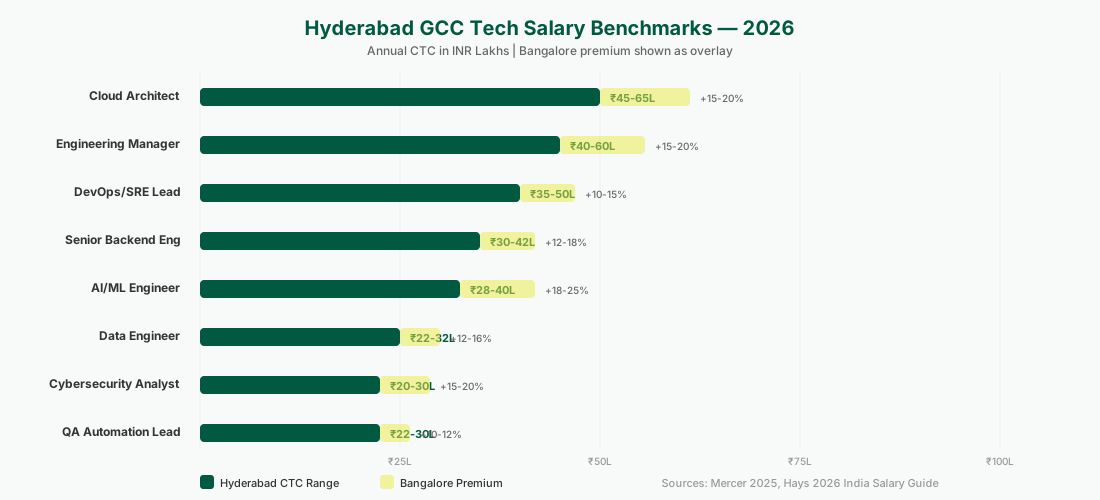
Salary benchmarking is critical for GCCs competing for talent in Hyderabad's increasingly competitive market. According to Mercer's 2025 India Total Remuneration Survey and the Hays 2026 India Salary Guide, Hyderabad tech salaries have grown 12-15% year-over-year, driven by GCC expansion and cloud infrastructure demand.
| Role | Experience | Hyderabad CTC (INR LPA) | Bangalore Premium |
|---|---|---|---|
| Cloud Architect (AWS/Azure) | 10-15 yrs | 45-65 LPA | +15-20% |
| Senior Backend Engineer | 7-10 yrs | 30-42 LPA | +12-18% |
| DevOps/SRE Lead | 8-12 yrs | 35-50 LPA | +10-15% |
| Data Engineer | 5-8 yrs | 22-32 LPA | +12-16% |
| Cybersecurity Analyst | 5-8 yrs | 20-30 LPA | +15-20% |
| AI/ML Engineer | 5-8 yrs | 28-40 LPA | +18-25% |
| QA Automation Lead | 7-10 yrs | 22-30 LPA | +10-12% |
| Engineering Manager | 10-15 yrs | 40-60 LPA | +15-20% |
The Bangalore premium column shows how much more the same role commands in Bangalore — making Hyderabad a cost-effective choice without sacrificing talent quality. BFSI-specialist roles carry an additional 10-15% premium in Hyderabad due to the concentration of banking GCCs competing for compliance-aware engineers.
What Makes Hyderabad's Talent Pool Different from Bangalore's?
Hyderabad's tech talent pool has distinct characteristics that GCC hiring strategies must account for — simply replicating a Bangalore hiring playbook in Hyderabad leads to misaligned expectations and slower fills.
BFSI expertise runs deeper. Hyderabad's concentration of banking GCCs (HSBC, Wells Fargo, Bank of America, UBS, Franklin Templeton) has created a large pool of engineers with financial services domain knowledge — regulatory compliance, trading systems, risk modelling, and payment infrastructure. According to NASSCOM's 2025 BFSI talent data, Hyderabad has 35% more BFSI-experienced tech professionals per capita than Bangalore. GCCs in banking and financial services find faster fills and better domain fit in Hyderabad.
Cloud infrastructure talent is abundant but competitive. Microsoft, Google, Amazon, and Salesforce all operate major engineering centres in Hyderabad, creating a strong base of cloud-native engineers. The competition for senior cloud architects (10+ years, multi-cloud experience) is intense — these candidates receive 4-6 competing offers according to the Hays 2026 India Talent Report. Quantalent AI's sourcing engine identifies passive cloud architects through contribution analysis on GitHub, AWS community forums, and conference speaker networks before they enter the active job market. Every shortlisted candidate then passes through Quantalent AI's dual-validation process — AI technical assessment plus domain expert interview — ensuring GCCs receive candidates vetted for both cloud architecture depth and enterprise readiness.
Lower startup competition preserves enterprise talent. Bangalore's 40,000+ startups aggressively compete with GCCs for mid-level engineers. Hyderabad's startup ecosystem is smaller (approximately 8,000 startups according to T-Hub's 2025 data), meaning GCCs face less competition from equity-rich startups offering ESOPs and rapid career progression. Mid-level engineers in Hyderabad are more likely to prioritise stability, benefits, and work-life balance — aligning with the GCC value proposition.
For a broader comparison of talent dynamics across all major GCC cities, see our GCC tech talent landscape guide.
How Do You Handle 60-90 Day Notice Periods When Hiring for Hyderabad GCCs?
Notice periods are the single biggest operational challenge in Hyderabad GCC recruitment. According to the Hays 2026 India Talent Report, 78% of mid-to-senior tech professionals in Hyderabad are on 60-90 day notice periods — and 25-30% of candidates who accept offers drop out during this window due to counteroffers from current employers.
Hyderabad's BFSI GCCs face an especially acute version of this problem. Banks like HSBC, Wells Fargo, and Bank of America enforce strict 90-day notice periods for compliance-sensitive roles, and these employers actively counteroffer departing engineers with 30-40% salary hikes during the notice window. A GCC hiring without notice period strategy loses roughly one in three accepted candidates.
Effective notice period management in Hyderabad requires three tactics. First, pipeline over-building — sourcing 2.5-3x the required candidate volume from day one, accounting for predictable dropout rates. Second, structured candidate engagement through the notice window: weekly touchpoints, pre-joining onboarding modules, and early team introductions that build psychological commitment before the start date. Third, targeting candidates already in their notice period or on shorter 30-day cycles at product startups and mid-sized IT services firms — a segment that Quantalent AI's sourcing engine specifically filters for across 25+ platforms.
Buyout negotiation adds another lever. Some Hyderabad GCCs accelerate hiring by offering notice period buyouts — typically 1-2 months of salary — allowing candidates to exit early. According to NASSCOM's 2025 workforce mobility data, notice period buyouts have increased 45% year-over-year among GCCs in Hyderabad, particularly for cloud architects and senior BFSI engineers where the cost of a vacant seat exceeds the buyout amount within weeks.
For GCCs comparing Hyderabad with Bangalore for their next expansion, our Bangalore GCC hiring guide provides equivalent salary benchmarks and talent pool analysis for a side-by-side evaluation.

Which Industries Should GCCs Target When Hiring in Hyderabad?
Hyderabad's GCC ecosystem clusters around three dominant industry verticals, each with distinct hiring patterns and talent availability.
BFSI (40% of Hyderabad GCCs). Banking and financial services GCCs hire the highest volumes — HSBC alone employs 15,000+ technology professionals in Hyderabad. Key roles: Java/Spring Boot engineers, risk analytics developers, payment infrastructure architects, regulatory compliance specialists. Quantalent AI's BFSI-experienced domain experts assess candidates for both technical capability and financial services regulatory awareness.
Cloud and Enterprise Tech (30% of Hyderabad GCCs). Microsoft, Google, Amazon, Salesforce, and ServiceNow drive demand for cloud architects, platform engineers, and SRE specialists. The talent supply is strong but highly competitive at senior levels. Quantalent AI's AI-powered sourcing identifies passive candidates through cloud certification databases, open-source contribution patterns, and professional community engagement.
Pharma and Healthcare Technology (15% of Hyderabad GCCs). Hyderabad's proximity to Genome Valley and India's pharmaceutical capital creates unique demand for engineers building clinical trial platforms, drug discovery AI systems, and healthcare data infrastructure. GCCs like Novartis, AstraZeneca, and Dr. Reddy's compete for a relatively small pool of engineers with both tech skills and life sciences domain knowledge.
For a detailed overview of recruitment models and how to structure your GCC recruitment agency partnership, see our comprehensive guide.
Ready to hire for your Hyderabad GCC? Email contact@quantalent.ai or book a free consultation. Quantalent AI provides Hyderabad-specific salary benchmarking, talent availability analysis, and a sourcing strategy tailored to your industry vertical — whether BFSI, cloud, or pharmatech.