The best cities for setting up a GCC in India in 2026 are Bangalore (largest talent pool), Hyderabad (best value-to-quality ratio), Pune (automotive and SaaS), Chennai (BFSI and semiconductor), and Gurugram (consulting proximity). Tier-2 cities including Coimbatore, Kochi, and Jaipur offer 25-35% cost savings with structurally lower attrition. Quantalent AI recruits across all major GCC hubs and helps capability centers evaluate multi-city strategies balancing talent access, cost, and scalability.
Which City Has the Largest Tech Talent Pool for GCCs in India?
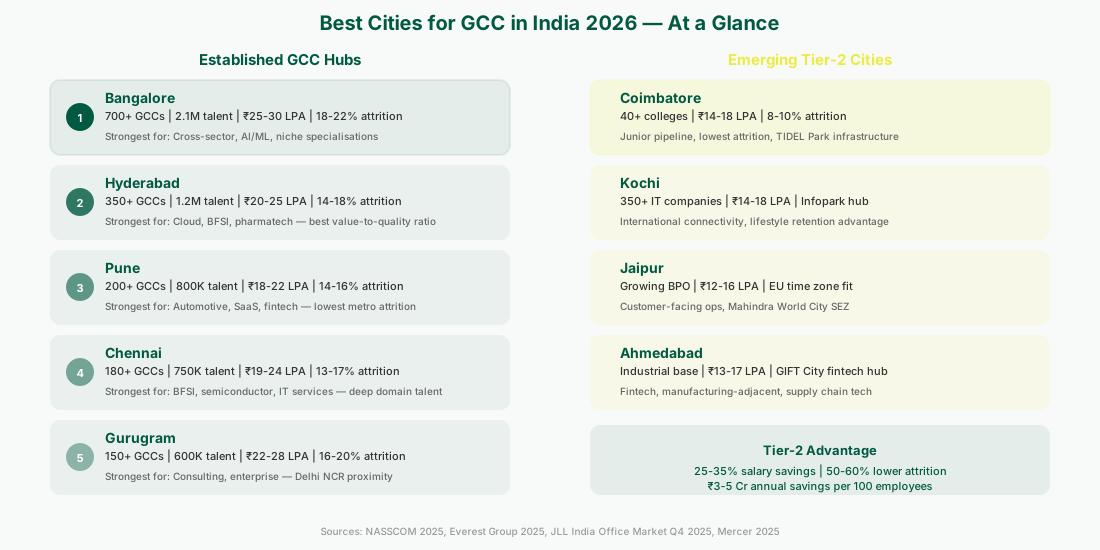
Bangalore dominates India's GCC landscape with 700+ capability centers and a tech workforce of 2.1 million professionals. According to NASSCOM's 2025 GCC India Report, 40% of all India GCCs are headquartered in Bangalore, making it the default choice for first-time GCC setups — especially those requiring access to niche skills like AI/ML, cloud architecture, and cybersecurity.
Bangalore's advantages come with tradeoffs. Attrition runs 18-22% annually — the highest among major GCC cities — driven by intense employer competition. Mid-level software engineer salaries average INR 25-30 LPA, 15-25% above other metros. Office lease costs on the Outer Ring Road corridor have risen 20% since 2023, reaching INR 90-120 per square foot.
Hyderabad has emerged as Bangalore's closest competitor, hosting 350+ GCCs with particular strength in cloud computing (Amazon, Microsoft, Google all operate major centers), BFSI, and pharmatech. According to the Everest Group's 2025 GCC Talent Report, Hyderabad's GCC headcount grew 18% year-over-year — faster than Bangalore's 10%.
How Do the Top 5 GCC Cities Compare in India?
| Factor | Bangalore | Hyderabad | Pune | Chennai | Gurugram |
|---|---|---|---|---|---|
| GCC Count | 700+ | 350+ | 200+ | 180+ | 150+ |
| Tech Talent Pool | 2.1M | 1.2M | 800K | 750K | 600K |
| Mid-Level SWE Salary | ₹25-30 LPA | ₹20-25 LPA | ₹18-22 LPA | ₹19-24 LPA | ₹22-28 LPA |
| Attrition Rate | 18-22% | 14-18% | 14-16% | 13-17% | 16-20% |
| Office Cost (₹/sqft) | 90-120 | 55-75 | 50-65 | 45-65 | 80-110 |
| Top Industry | Cross-sector | Cloud/BFSI | Auto/SaaS | BFSI/Semi | Consulting |
| Tier-2 Spillover | Mysore, Hubli | Vizag, Warangal | Nashik | Coimbatore | Jaipur, Chandigarh |
Pune offers the strongest ecosystem for automotive and SaaS GCCs — Volkswagen, Mercedes-Benz, and Cummins all operate engineering centers alongside a thriving SaaS startup scene. Chennai leads in BFSI and semiconductor, with a talent pool shaped by decades of TCS, Infosys, and Texas Instruments operations. Gurugram benefits from proximity to Delhi NCR's consulting and enterprise ecosystem but faces Bangalore-level cost pressures without the same talent depth.
For detailed salary benchmarks and hiring dynamics in Hyderabad, Pune, and Chennai, see our city-specific analyses: GCC recruitment in Hyderabad and GCC recruitment in Pune and Chennai.
Why Are GCCs Expanding to Tier-2 Cities in India?
Tier-2 city expansion is the most significant structural shift in the India GCC landscape in 2026. According to the Everest Group's 2025 report, tier-2 GCC headcount grew 35% year-over-year compared to 12% in metros — and the gap is accelerating.
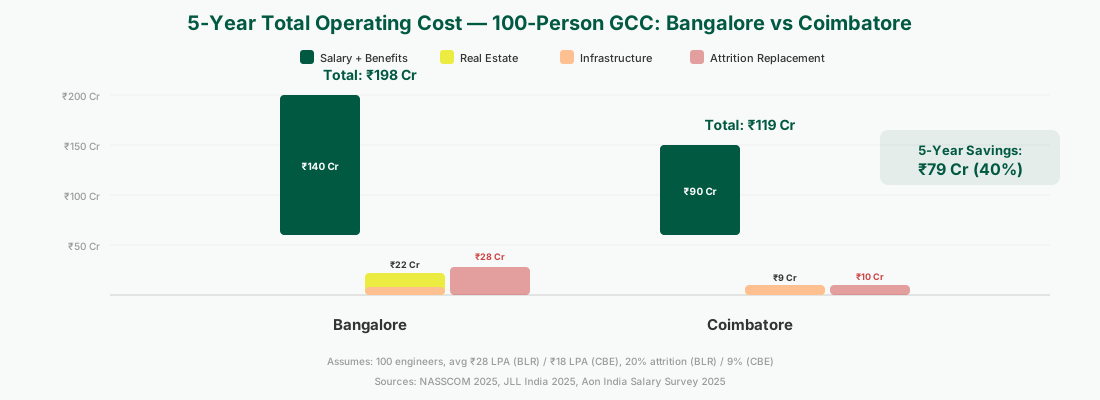
Coimbatore leads the tier-2 surge. With 40+ engineering colleges within 100 km (including PSG Tech and Amrita University), it offers a self-replenishing junior talent pipeline. Attrition rates of 8-10% are less than half the Bangalore average. TIDEL Park provides Grade A office space at INR 30-40 per square foot.
Zoho's decision to base its headquarters in Tenkasi (near Coimbatore) has validated the region's viability for product engineering — proving that world-class software can be built outside India's traditional metro hubs.
Kochi combines strong IT infrastructure (Infopark hosts 350+ companies) with lifestyle appeal that aids retention. Direct international flights and proximity to established tech hubs make it viable for teams that need occasional global connectivity. Mid-level salaries of INR 14-18 LPA represent 35-40% savings over Bangalore.
Jaipur is best suited for GCCs with customer-facing operations. European time zone overlap, a growing BPO ecosystem, and lower costs (INR 12-16 LPA mid-level) make it ideal for service delivery and support functions. Mahindra World City offers SEZ-grade infrastructure at tier-2 pricing.
Ahmedabad is emerging for fintech and manufacturing-adjacent GCCs. Gujarat's industrial base creates natural demand for engineering talent with domain expertise in supply chain, IoT, and embedded systems.
How Should You Choose Between a Single City and Multi-City GCC Strategy?
Single-city GCCs work best below 200 employees — coordination costs are low, and one office builds team cohesion faster. Above 200 employees, multi-city strategies become economically compelling. According to Mercer's 2025 India TA Study, GCCs operating across 2-3 cities reduce aggregate attrition by 25% and compensation costs by 18% compared to single-city equivalents.
The optimal multi-city model for most GCCs combines a primary hub in Bangalore or Hyderabad (for leadership, niche specialisations, and global visibility) with a secondary office in a tier-2 city (for volume engineering roles where cost and retention matter most). A 300-person GCC might staff 150 in Bangalore, 100 in Coimbatore, and 50 in Kochi — concentrating senior and specialist roles in Bangalore while building deep mid-level capacity in tier-2 locations.
Quantalent AI helps GCCs evaluate and execute multi-city strategies by sourcing candidates simultaneously across all target cities, benchmarking compensation to each location's market, and maintaining a unified candidate experience regardless of geography. For a comprehensive view of the talent landscape across all GCC cities, see our GCC tech talent landscape report.
What Infrastructure Should You Evaluate Before Choosing a GCC City?
Beyond talent and cost, three infrastructure factors determine GCC success in any Indian city. International connectivity matters for centres with frequent headquarters interaction — Bangalore, Hyderabad, and Chennai offer direct flights to most global hubs, while Pune and Gurugram require connections through Mumbai or Delhi.
Power reliability and internet infrastructure vary significantly. According to JLL's 2025 India Office Market report, Grade A office spaces in tier-1 cities guarantee 99.9% uptime, but tier-2 locations may require dedicated backup power and redundant ISP connections — adding INR 3-5 lakhs per month for a 100-person office.
Talent ecosystem depth determines long-term sustainability. Cities with 500+ IT companies (Bangalore, Hyderabad, Pune, Chennai) offer large lateral hiring pools. Tier-2 cities rely more heavily on campus hiring — which works well for junior roles but creates challenges when you need experienced specialists. GCCs in tier-2 cities should plan for 60-70% of hires coming from campus or junior-lateral pools, with senior roles filled through remote arrangements or city-hopping incentives.
Key Takeaways
- Bangalore remains the default GCC city with 700+ centers and 2.1M tech professionals, but Hyderabad is closing the gap with 18% YoY growth
- Pune (automotive/SaaS), Chennai (BFSI/semiconductor), and Gurugram (consulting) each have distinct industry strengths
- Tier-2 cities (Coimbatore, Kochi, Jaipur, Ahmedabad) offer 25-35% cost savings with 50-60% lower attrition than metros
- Multi-city strategies reduce aggregate attrition by 25% and compensation costs by 18% above 200 employees
- Infrastructure evaluation should cover international connectivity, power reliability, and talent ecosystem depth before committing to a location
Email contact@quantalent.ai or book a free consultation for a customised city evaluation based on your GCC's industry focus, role mix, and scale targets. Quantalent AI provides data-driven location advisory alongside recruitment services across every major GCC hub in India.