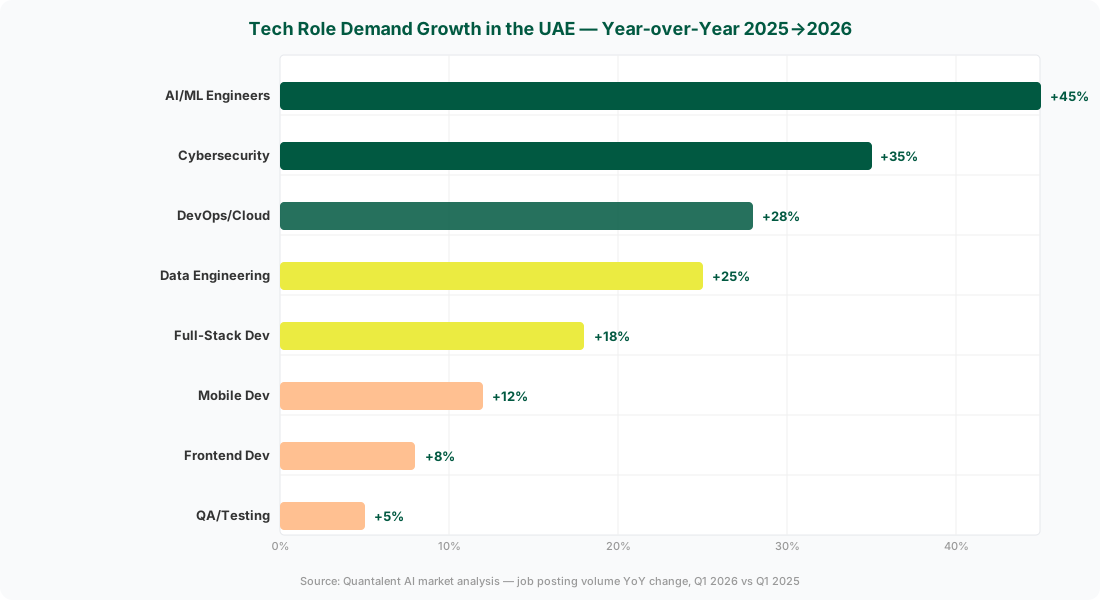
The UAE tech job market in 2026 is defined by three forces: explosive AI demand, a widening talent gap, and government-backed digital transformation. AI/ML engineer demand grew 45% year-over-year, cybersecurity hiring surged due to new regulatory mandates, and 80-85% of tech hires continue to come from international talent pools. Quantalent AI tracks these trends through our placement data across 200+ tech hires in the UAE — here's what employers need to know to hire effectively this year.
The 10 Biggest Tech Hiring Trends in the UAE for 2026
1. AI/ML Engineering Demand Has Exploded
The UAE's National AI Strategy and the broader Middle East AI arms race have made AI/ML engineers the single most sought-after tech talent in the region. According to the World Economic Forum's Future of Jobs Report 2025, AI and machine learning specialists top the global list of fastest-growing roles, with demand outpacing supply by 3:1. In the UAE specifically, open AI/ML positions grew 45% from 2025 to 2026, while the qualified candidate pool grew only 12%.
What this means for employers: You're competing with every bank, government entity, and startup in the UAE for the same small pool of AI talent. Companies that source AI engineers internationally — particularly from India's deep AI talent pool — are filling these roles 3-4x faster than those limiting themselves to local candidates.
2. Cybersecurity Hiring Is Now Compliance-Driven
According to Gartner's 2025 Security & Risk Management Survey, the Middle East saw a 40% increase in cybersecurity spending year-over-year — the highest growth rate of any region. The UAE Information Assurance Regulation and sector-specific cybersecurity mandates (particularly for financial institutions, healthcare, and government contractors) have turned cybersecurity from a "nice-to-have" into a regulatory requirement. Companies must now demonstrate certified cybersecurity staff or face penalties.
The result: cybersecurity specialist salaries jumped 15-18% in a single year, and demand shows no signs of slowing. SOC analysts, penetration testers, and security architects are the most difficult cybersecurity roles to fill in Dubai.
3. Cloud Migration Is Creating DevOps Urgency
UAE data residency regulations now require certain categories of data to be stored within the country. Combined with the natural maturation of UAE tech companies, this has triggered a wave of cloud migration projects — and a corresponding surge in demand for cloud architects, DevOps engineers, and SRE specialists.
AWS, Azure, and GCP-certified engineers command 12-15% salary premiums over non-certified peers. Multi-cloud expertise (two or more platforms) adds another 10-15%.
4. The Senior Engineer Shortage Is Acute
Dubai has adequate supply of junior and mid-level developers. The crisis is at the senior level — engineers with 8+ years of experience, system design expertise, and leadership capability. For every senior engineering role posted in Dubai, there are fewer than 0.5 qualified local candidates.
This is why 70% of senior tech hires in Dubai come from international relocation, primarily from India, Pakistan, the UK, and Eastern Europe. Companies that don't have an international sourcing strategy are leaving senior roles unfilled for 90-120 days.
5. Remote Work Is Both an Opportunity and a Threat
The threat: Top Dubai-based engineers can now work remotely for US and European companies paying in USD/EUR while living tax-free in the UAE. The salary arbitrage pulls talent out of the local hiring pool without those engineers leaving the country. For the full regulatory picture, see our guide to remote hiring regulations in Dubai 2026 covering freelance visas, hybrid policies, and compliance requirements.
The opportunity: Dubai's time zone (GMT+4) makes it a natural bridge between European and Asian working hours. Companies are increasingly hiring remote engineers in India and Pakistan to work UAE hours — a model that Quantalent AI facilitates through our Dubai-Bengaluru hiring pipeline.
6. Fintech Continues to Dominate Hiring
DIFC-based fintech companies and the broader financial technology ecosystem remain the largest employers of tech talent in Dubai. The sector accounts for roughly 25% of all tech job postings in the UAE, driven by:
- Open banking regulations creating API engineering demand
- Crypto and digital asset frameworks (VARA) attracting Web3 companies
- Payment infrastructure modernisation across the GCC
- Islamic fintech — a uniquely Middle Eastern niche growing 40%+ annually
7. Government Digital Transformation Creates Thousands of Roles
The Dubai Digital Strategy 2026, Abu Dhabi's digital government programme, and federal-level Smart Government initiatives are collectively creating 3,000-5,000 new tech roles annually across government and semi-government entities.
These roles span the full stack — from frontend developers building citizen-facing apps to data engineers building analytics platforms. Government tech salaries are 10-20% below private sector, but offer superior stability, generous benefits, and Emirates preference pathways.
8. The Startup Ecosystem Is Maturing
Dubai's tech startup ecosystem has evolved beyond early-stage companies. Series B and C startups are now common, creating demand for experienced engineering leaders — VPs of Engineering, CTOs, and Staff Engineers who can scale teams from 10 to 100.
Hiring experienced engineering leaders is a challenge that recruitment agencies specialising in startups are uniquely positioned to solve, because these candidates rarely respond to LinkedIn InMails from unknown companies.
9. Skills-Based Hiring Is Replacing Degree-Based Filtering
UAE employers — particularly in the private tech sector — are increasingly hiring based on demonstrable skills rather than university degrees. Coding bootcamp graduates, self-taught developers with strong GitHub portfolios, and career-switchers with relevant project experience are being hired alongside traditionally educated candidates.
The skills-based hiring shift expands the talent pool but makes assessment harder. Companies need technical vetting processes that evaluate actual coding ability, not just credentials. Quantalent AI's dual-validation approach addresses exactly this challenge — AI assessment of technical skills combined with domain expert evaluation.
10. Employer Branding Now Matters for Tech Hiring
In a market where every company is competing for the same talent, employer branding has become a competitive advantage. Tech candidates in Dubai research companies on Glassdoor, LinkedIn, and community forums before responding to recruiters. Companies with visible engineering blogs, open-source contributions, and tech conference presence get 2-3x more responses from passive candidates.
What Smart Employers Are Doing Differently in 2026
The companies winning the tech talent war in the UAE share five practices:
1. They source internationally from day one. Instead of posting on Bayt and waiting, they engage specialist agencies with international reach. The majority of strong tech candidates for UAE roles come from India, and companies with direct India sourcing capabilities fill roles 40-60% faster. For a step-by-step approach, see our complete guide to tech hiring in Dubai 2026.
2. They make offers within 2 weeks of first interview. The best candidates have multiple offers. Companies that take 4-6 weeks to make decisions lose 60% of their preferred candidates to faster-moving competitors.
3. They benchmark salaries against current data. Using salary data from 2024 to make 2026 offers means losing candidates. Current Dubai salary benchmarks show 8-12% increases across most roles.
4. They invest in technical assessment. Companies using structured technical interviews (coding tests, system design rounds, domain expert evaluations) hire better-performing engineers and have lower 6-month attrition rates than those relying on resume-based screening alone.
5. They use AI-powered recruitment tools. Quantalent AI's platform scans 25+ sourcing platforms simultaneously, evaluating candidates across 200+ parameters. This delivers a 3:1 interview-to-hire ratio — meaning our clients hire 1 in every 3 candidates we present, versus the industry average of 1 in 8.
How Wide Is the Tech Talent Gap in the UAE?
| Metric | 2025 | 2026 | Change |
|---|---|---|---|
| Open tech positions in UAE | ~18,000 | ~23,500 | +30% |
| Active tech job seekers | ~12,000 | ~13,000 | +8% |
| Talent gap | ~6,000 | ~10,500 | +75% |
| Average time-to-fill (tech) | 42 days | 48 days | +14% |
| International hire % | 78% | 83% | +5pp |
| Average salary increase | 6-8% | 8-12% | +3-4pp |
Source: Quantalent AI market analysis based on placement data and job market monitoring, Q1 2026.
The talent gap widened from 6,000 unfilled positions in 2025 to 10,500 in 2026. This is the fundamental driver of everything else — rising salaries, longer time-to-fill, and increasing reliance on international hiring.
How Quantalent AI Helps You Navigate These Trends
Quantalent AI is built for exactly this market. Our model addresses the three biggest challenges UAE employers face in 2026:
- International sourcing at speed. Our Bengaluru office taps India's tech talent pool directly — the largest source of international tech hires for the UAE. AI sourcing across 25+ platforms finds candidates that LinkedIn-only approaches miss.
- Technical depth. Domain experts assess every candidate's technical skills before you see them. No more wasting interview hours on candidates who can't code.
- Market intelligence. We share real-time salary data, candidate availability insights, and hiring trend analysis so you can make informed decisions.
"Quantalent was instrumental in filling our niche roles by tapping into talent from diverse communities and unconventional platforms." — Harsha Kadimisetty, CEO, Aerchain
Stay Ahead of the Market
The companies that adapt fastest to these trends will secure the best talent. Those that don't will spend more time and money filling the same roles with weaker candidates.
Get a free market briefing: Email contact@quantalent.ai or book a consultation. We'll share current salary data for your specific roles, candidate availability analysis, and a recommended hiring strategy for your 2026 headcount plan.