Quantalent AI provides executive search for global capability centers in India, combining AI-powered passive candidate sourcing across 25+ platforms with senior domain expert assessment to fill India Site Leads, VP Engineering, Engineering Managers, and technical leadership roles. In 2026, finding GCC leaders who bridge MNC operational culture and India's tech ecosystem requires a search approach that reaches beyond LinkedIn — 78% of qualified candidates are not actively looking, according to the Hays 2026 India Executive Recruitment Report.
Why Is Executive Search for GCCs Different from Standard Recruitment?
GCC leadership hiring operates under constraints that standard recruitment cannot address. An India Site Lead isn't just a senior engineer — the role requires simultaneous competence in MNC governance, India talent strategy, cross-cultural team building, and technical credibility. According to Mercer's 2025 India Leadership Talent Study, only 12% of India's senior technology professionals have the combined MNC experience and team-building track record that GCCs require for site leadership.
The candidate pool shrinks further when confidentiality requirements enter. New GCC setups, leadership transitions, and strategic pivots often require discreet searches that cannot be advertised on job boards. According to the Hays 2026 India Executive Recruitment Report, 65% of GCC leadership searches are conducted confidentially — eliminating public job postings as a sourcing channel.
Standard recruitment agencies compound the problem by relying on active candidate databases. Senior leaders earning INR 80 LPA-1.5 Cr rarely browse job portals. Reaching these candidates requires network-based outreach, industry event engagement, and AI-powered identification through publication history, conference speaking patterns, and professional community activity — sourcing channels that Quantalent AI's platform scans systematically.
What GCC Leadership Roles Require Executive Search?
Not every senior hire requires executive search. Understanding which roles justify the investment prevents overspending on standard hires and underspending on critical leadership positions.
| Role | Typical CTC (INR) | Search Model | Why |
|---|---|---|---|
| India Site Lead / Country Head | 1-2 Cr | Retained executive search | Tiny candidate pool, confidential, multi-stakeholder |
| VP Engineering | 80 LPA-1.5 Cr | Retained or AI-powered search | Passive candidates, technical + leadership assessment |
| Engineering Director | 60-90 LPA | AI-powered search | Broader pool, still mostly passive candidates |
| Engineering Manager | 40-65 LPA | Contingency or AI-powered | Larger candidate pool, speed-critical |
| Principal/Staff Engineer | 50-80 LPA | AI-powered search | Deep technical assessment needed, passive candidates |
| Tech Lead | 30-50 LPA | Contingency | Active candidates available, standard screening |
According to NASSCOM's 2025 GCC India Report, the average GCC in India employs 3-5 leaders at VP level and above, 8-12 Engineering Managers, and 15-25 Tech Leads. Executive search is justified for the top 3-5 roles; AI-powered contingency recruitment handles the rest more cost-effectively.

What Makes Finding GCC Leaders Who Bridge MNC and India Cultures So Difficult?
The central challenge of GCC executive search is the culture bridge problem. GCCs need leaders who operate fluently in two very different professional cultures — and candidates who excel in one often struggle in the other.
MNC operational fluency requires specific experience. Global reporting cadences, compliance-driven decision-making, matrix management structures, and cross-timezone stakeholder communication are skills learned through years of practice inside multinational environments. According to LinkedIn's 2025 India Leadership Talent Insights, only 22% of India's engineering directors have spent more than 5 years in an MNC environment — the threshold where operational fluency becomes instinctive rather than effortful.
India talent market expertise cannot be imported. Understanding 60-90 day notice periods, counteroffer dynamics, Bangalore-vs-Hyderabad salary differentials, and the cultural expectations of Indian engineers requires on-ground experience. GCC Site Leads hired from headquarters offices — a common pattern — frequently underperform because they apply Western hiring and retention playbooks to a fundamentally different market.
Technical credibility determines team retention. Indian engineering teams expect their leaders to demonstrate technical competence, not just management skill. According to the Hays 2026 India Talent Report, 45% of engineers at GCCs cite "non-technical leadership" as a top-3 reason for leaving. A Site Lead who cannot engage in architecture discussions or code review feedback loses credibility — and team members — within the first 6 months.
Quantalent AI's executive search process addresses this through dual-validation at the leadership level — combining AI-driven identification of candidates with the right career trajectory with expert assessment by senior leaders who have themselves built and scaled GCC teams in India.
What Are Executive Compensation Benchmarks for GCCs in India in 2026?
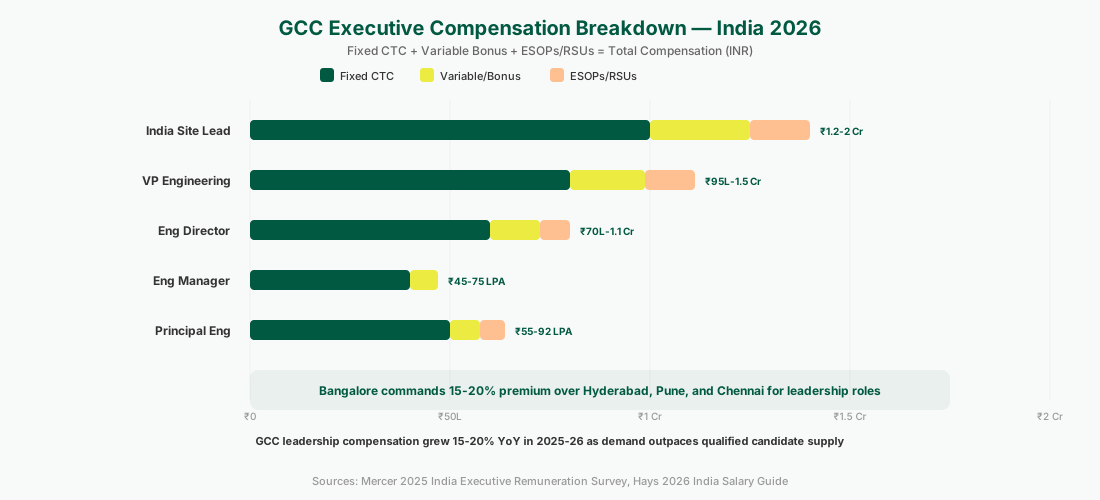
Competitive compensation is necessary but not sufficient for attracting GCC leadership talent. According to Mercer's 2025 India Executive Remuneration Survey, GCC leadership compensation has grown 15-20% year-over-year as demand outpaces the qualified candidate pool.
| Role | Fixed CTC (INR) | Variable/Bonus | ESOPs/RSUs | Total Compensation |
|---|---|---|---|---|
| India Site Lead | 1-1.5 Cr | 20-30% of fixed | Common (parent company) | 1.2-2 Cr |
| VP Engineering | 80 LPA-1.2 Cr | 15-25% of fixed | Common | 95 LPA-1.5 Cr |
| Engineering Director | 60-90 LPA | 15-20% of fixed | Sometimes | 70 LPA-1.1 Cr |
| Engineering Manager | 40-65 LPA | 10-15% of fixed | Rare | 45-75 LPA |
| Principal Engineer | 50-80 LPA | 10-15% of fixed | Sometimes | 55-92 LPA |
Bangalore commands a 15-20% premium over Hyderabad, Pune, and Chennai for leadership roles. GCCs offering below-market fixed compensation can compensate with stronger ESOP/RSU packages — particularly effective for candidates moving from Indian startups where equity is a standard compensation component.
For a broader analysis of how these leadership salaries fit within the overall GCC tech talent landscape, see our comprehensive guide covering all role levels across India's major GCC cities.
How Does AI-Powered Executive Search Differ from Traditional Retained Search?
Traditional retained search firms rely on personal networks and relationship-based candidate identification — a model that works but limits the search to candidates already known to the firm's partners. AI-powered executive search expands the aperture dramatically.
Quantalent AI's sourcing engine identifies potential leadership candidates through executive-specific signals that human networks cannot systematically track: published engineering blog posts, conference speaking engagements, open-source project leadership, and patent filings. These signals reveal leadership-calibre candidates invisible to traditional headhunters who rely on LinkedIn network proximity alone.
The combination matters because it eliminates the biggest risk in executive search: a search firm presenting only candidates from its existing network rather than the best candidates available. According to the Hays 2026 India Executive Recruitment Report, AI-augmented executive searches surface 40-60% more qualified candidates than network-only approaches — and reduce search timelines by 30% by parallelising identification and engagement.
For GCCs weighing whether to build internal executive recruiting capability versus using external search, our in-house vs agency comparison provides cost-per-hire analysis across different hiring volumes, including leadership roles where the economics differ significantly from standard recruitment.
Hiring GCC leadership in India? Email contact@quantalent.ai or book a free consultation. Quantalent AI provides a confidential executive search briefing within 48 hours — including market mapping for your specific leadership profile, compensation benchmarking, and a sourcing strategy that reaches passive candidates traditional search firms miss.