Quantalent AI is a tech recruitment agency for startups in India, combining AI-powered sourcing across 25+ platforms with human domain expert vetting to help funded startups scale engineering teams fast. Series B and C startups hiring 10-50 engineers per quarter need recruitment partners that match startup speed — Quantalent AI delivers dual-validated, interview-ready candidates in an average of 12 days with a 3:1 interview-to-hire ratio.
Why Do Funded Startups Struggle to Hire Engineers in India?
India's startup ecosystem raised USD 12 billion in venture funding in 2025, according to Inc42's Annual Funding Report, yet most funded startups report engineering hiring as their top scaling bottleneck. The problem is not a lack of engineers — NASSCOM estimates India produces 1.5 million engineering graduates annually and hosts 5.4 million active software professionals. The problem is finding the right engineers at startup speed.
Post-funding hiring surges create a specific set of challenges. A Series B startup closing a USD 30-50 million round typically needs to grow its engineering team by 40-60% within two quarters. Internal recruiters — if the startup has them at all — handle 4-6 hires per month. The gap between demand and internal capacity forces CTOs to choose between lowering the hiring bar or missing delivery timelines.
Compounding the problem, India's 60-90 day notice periods mean accepted offers don't translate into joined engineers for 2-3 months. LinkedIn Talent Insights data from 2025 shows that 22% of accepted offers at Indian startups result in dropouts before joining day, driven by counteroffers and competing opportunities. A startup planning to hire 20 engineers must source and close 26-28 to actually seat 20.
How to Scale From 10 to 100 Engineers Without Lowering the Bar
Scaling a startup engineering team from 10 to 100 requires a fundamentally different hiring approach than what worked for the first 10 hires. Founder networks and referrals — which typically fill the first engineering roles — exhaust quickly. Naukri and LinkedIn job postings attract volume but not quality, flooding hiring managers with hundreds of mismatched applications.
Recruitment agencies built for startups solve this by running parallel hiring pipelines. Backend, frontend, DevOps, QA, and AI/ML searches execute simultaneously rather than sequentially. Quantalent AI's dual-validation approach ensures consistent candidate quality across all pipelines — every engineer passes both AI assessment and a domain expert technical evaluation before reaching your interview panel.
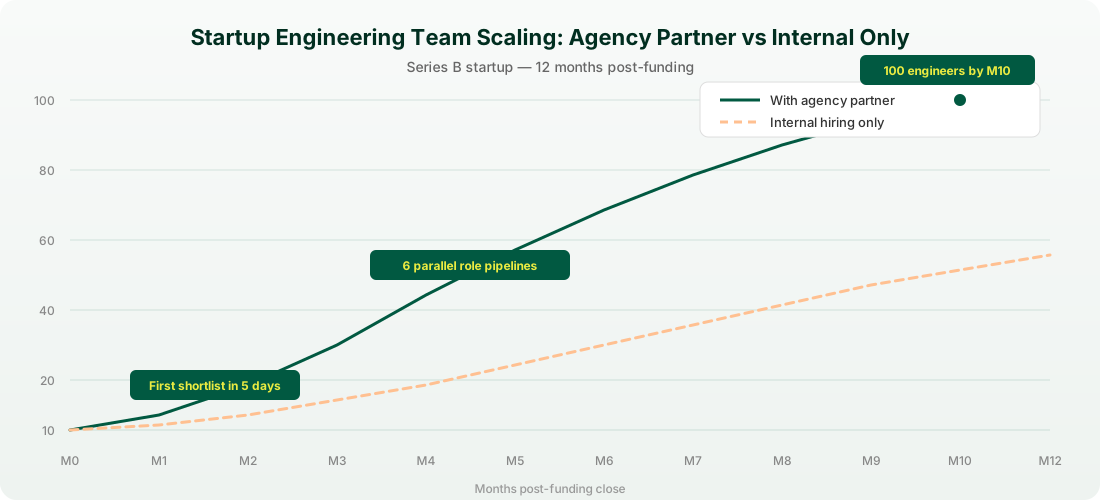
The difference is measurable. Startups relying solely on internal hiring and job boards take 45-60 days per senior engineering hire according to Naukri's 2025 Recruiter Pulse Survey. Quantalent AI's average time-to-close is 12 days because AI sourcing scans 25+ platforms in the first 48 hours while domain experts begin technical evaluations within the same week.
"Quantalent was instrumental in filling our niche roles by tapping into talent from diverse communities and unconventional platforms." — Harsha Kadimisetty, CEO, Aerchain (Supply Chain Tech)
What Is Contract-to-Hire and Why Do Indian Startups Use It?
Contract-to-hire is an engagement model where engineers join a startup on a 3-6 month contract before converting to permanent roles. Indian startups increasingly prefer contract-to-hire for three reasons: eliminating notice period delays, testing technical and cultural fit before committing to a full-time offer, and managing cash flow during uncertain scaling phases.
According to NASSCOM's 2025 India Technology Workforce Report, contract-to-hire engagements in the Indian tech sector grew 35% year-over-year as startups sought flexibility during post-funding scaling. The model works particularly well for roles where domain expertise matters — AI/ML engineers, cloud architects, and DevOps leads whose real-world output is difficult to assess through interviews alone.
Quantalent AI supports contract-to-hire engagements with candidates who are pre-vetted and willing to start on contract terms. Our sourcing explicitly filters for professionals open to contract models — a critical distinction because many experienced engineers reject contract offers if approached without proper context. Candidates sourced through our system understand the conversion pathway from day one, which is why conversion rates for our contract-to-hire placements exceed 85%.
How to Handle Post-Funding Hiring Surges
Post-funding hiring surges follow a predictable pattern. The board expects rapid team growth. The CTO or VP Engineering defines 15-30 new roles across multiple teams. Internal recruiters are overwhelmed within weeks.
Job postings generate noise but not quality. Three months later, half the roles remain open.
Breaking this pattern requires three changes to the startup's hiring approach:
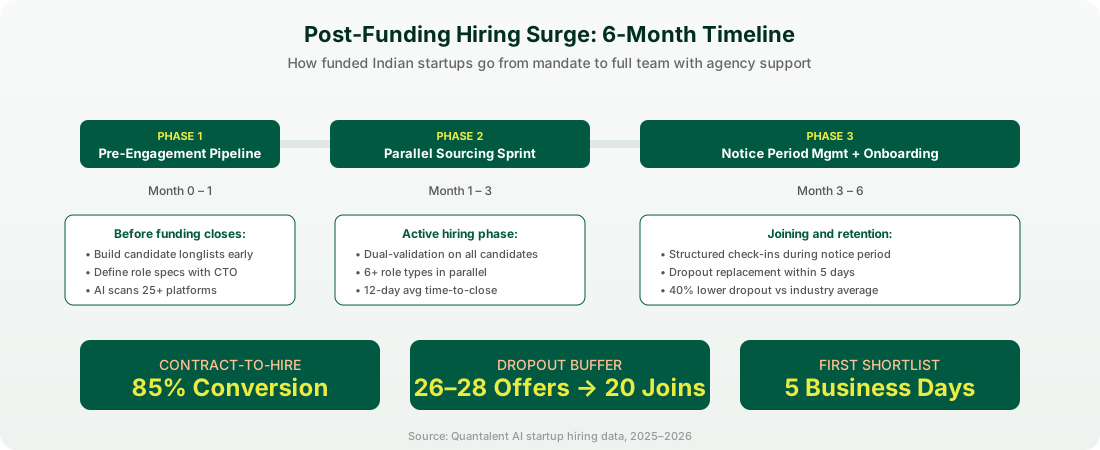
Front-load sourcing before the surge. Smart CTOs engage a recruitment partner 4-6 weeks before the funding round closes — building candidate pipelines before the official mandate begins. Our team builds pre-qualified longlists during this pre-engagement phase so that shortlists arrive within days of the formal kick-off.
Separate specialist and lateral hiring tracks. Treating a senior AI/ML engineer search the same as a mid-level backend developer search guarantees failure in at least one track. Quantalent AI assigns domain experts by specialisation — an AI/ML hire is assessed by engineers who have built production ML systems, not generalist recruiters running keyword searches. For startups with heavy AI hiring needs, our guide to hiring AI/ML engineers in India covers sourcing strategies and compensation benchmarks in detail.
Build dropout buffers into your hiring plan. With 22% average offer-dropout rates in Indian tech, a startup hiring 20 engineers should run 25-28 offers to seat 20. Our candidate engagement protocols — including regular check-ins between offer acceptance and joining — reduce dropout rates by 40% compared to industry averages.
What Makes a Good Recruitment Agency for Indian Startups?
Not every recruitment agency understands startup hiring. Enterprise-focused agencies optimise for process compliance and vendor management — valuable for corporates, irrelevant for a Series B startup where the CTO personally reviews every engineering hire.
Startup-ready recruitment agencies share four characteristics. Speed: first shortlists within 5 business days, not 3 weeks. Flexibility: contract-to-hire, part-time, and full-time options from the same pipeline.
Technical depth matters equally — domain experts who can evaluate a system design discussion, not recruiters who screen for keyword matches. Founder-friendly communication rounds out the list: direct Slack or WhatsApp access to your recruitment lead, not ticketing systems and weekly status calls.
"Quantalent transformed our recruitment by engaging passive talent. Their outreach and precise matching turned overlooked professionals into valuable, active contributors." — Saiteja Veera, CEO, Gamyam (Logistics Tech)
Quantalent AI was built for exactly this profile. Our team has placed engineers at SaaS, fintech, logistics tech, and deep tech startups across Bangalore, Hyderabad, and Pune. Startups looking for AI-specialist hiring can explore our AI recruitment services for startups — covering sourcing strategies for ML engineers, data scientists, and NLP specialists specifically.
Ready to Build Your Team?
Funded startups in India don't have months to wait for engineers. Quantalent AI delivers dual-validated, interview-ready engineering candidates in an average of 12 days — vetted by both AI and human domain experts who understand startup velocity.
Get started: Email us at contact@quantalent.ai or get in touch. Share your hiring plan and we'll have your first shortlist ready within 5 business days.