India's CTC (Cost to Company) is the total annual cost an employer bears for an employee — including components like employer PF, gratuity, and insurance that the employee never sees as cash. A ₹30 LPA CTC translates to approximately ₹22-24 LPA in take-home pay, creating a 20-25% gap that catches foreign employers off guard. Quantalent AI helps GCCs and MNCs structure compensation packages in the format Indian candidates expect, preventing the offer-stage confusion that causes 15-20% of late-stage dropouts.
What Are the Components of India's CTC Structure?
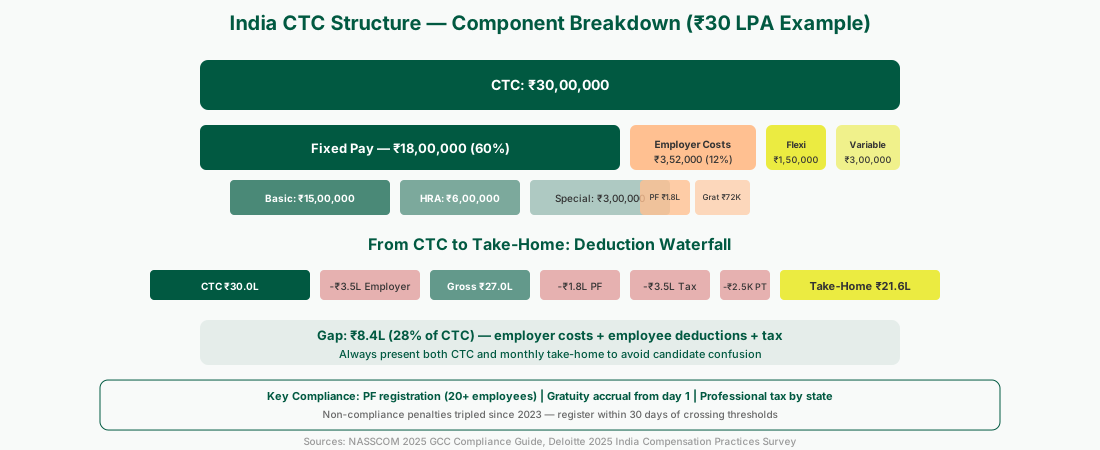
CTC in India comprises four layers: fixed pay, employer-mandated contributions, flexible benefits, and variable pay. Foreign employers accustomed to "annual salary = what the employee receives" must understand that Indian CTC includes costs that sit with the employer, not the employee.
Fixed Pay (55-65% of CTC) includes basic salary (the foundation for all statutory calculations), House Rent Allowance (HRA, typically 40-50% of basic for metro employees), and special/flexi allowance (the balancing component). Basic salary is deliberately kept lower in Indian structures because higher basic increases PF and gratuity liabilities.
Employer Contributions (12-18% of CTC) include Employer Provident Fund contribution (12% of basic salary, mandatory for establishments with 20+ employees), gratuity accrual (4.81% of basic, payable after 5 years of service under the Payment of Gratuity Act 1972), and Employer ESI contribution (3.25% of gross, applicable only for employees earning below ₹21,000 per month — rarely relevant for tech roles).
Flexible Benefits (5-10% of CTC) include meal coupons, telephone/internet reimbursement, fuel allowance, and leave travel allowance (LTA). These are tax-efficient components that reduce the employee's taxable income. GCCs typically offer a flexi-basket where employees allocate these based on personal tax-saving preferences.
Variable Pay (10-15% of CTC) includes annual performance bonus, retention bonus (increasingly common in GCCs), and sign-on bonus for lateral hires. Variable pay is not guaranteed — it depends on individual and company performance ratings.
How Do You Calculate Take-Home Salary From CTC in India?
Take-home salary (net salary) is what actually reaches the employee's bank account monthly. The gap between CTC and take-home surprises foreign employers because multiple deductions reduce the headline number significantly.
Starting from a ₹30 LPA CTC for a mid-level engineer in Bangalore:
| Component | Annual (₹) | Calculation |
|---|---|---|
| CTC | 30,00,000 | Starting point |
| Less: Employer PF | -1,80,000 | 12% of basic (₹15L) |
| Less: Gratuity | -72,000 | 4.81% of basic |
| Less: Insurance/Benefits | -50,000 | Group health, term life |
| Gross Salary | 26,98,000 | CTC minus employer costs |
| Less: Employee PF | -1,80,000 | 12% of basic (employee share) |
| Less: Professional Tax | -2,500 | ₹200/month (Karnataka) |
| Less: Income Tax | -3,50,000 | Approximate, new regime |
| Annual Take-Home | 21,65,500 | ~₹1.8L/month |
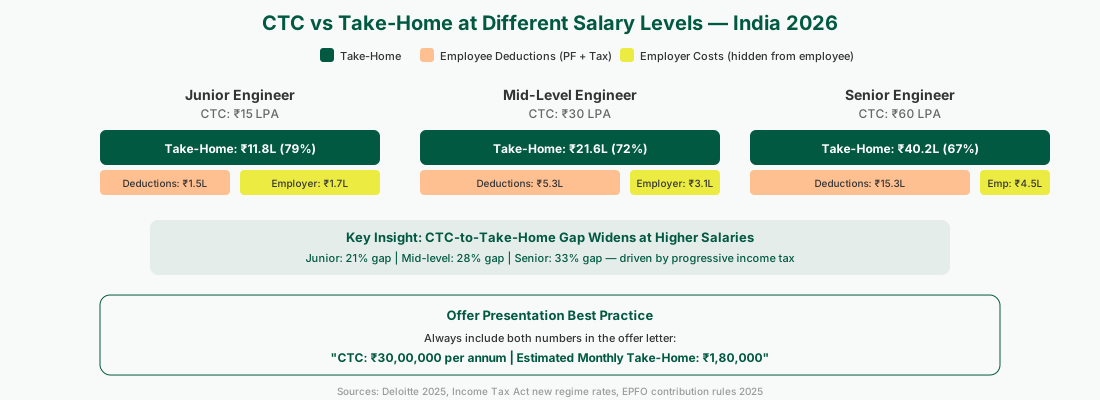
The effective take-home on a ₹30 LPA CTC is approximately ₹21.6 LPA — a 28% reduction from the headline CTC figure. According to Deloitte's 2025 India Compensation Practices Survey, this gap is the single most common source of offer-stage confusion for foreign employers, with 18% of candidates withdrawing because the take-home was "lower than expected."
What Compliance Requirements Apply to GCCs Hiring in India?
Foreign companies setting up hiring operations in India must navigate several mandatory compliance frameworks. According to NASSCOM's 2025 GCC Compliance Guide, non-compliance penalties have increased 3x since 2023, making early registration essential.
Provident Fund (PF). Registration with EPFO (Employees' Provident Fund Organisation) is mandatory for establishments with 20+ employees. Both employer and employee contribute 12% of basic salary. GCCs must register within 30 days of crossing the 20-employee threshold. Monthly PF filings are due by the 15th of the following month.
Professional Tax. State-level tax varying from ₹150-₹200 per month depending on the state. Karnataka (Bangalore) charges ₹200/month; Telangana (Hyderabad) charges ₹200/month; Maharashtra (Pune) follows a slab-based system. Registration required in the state where the employee works.
Gratuity. Payment of Gratuity Act 1972 requires employers to pay gratuity to employees who complete 5+ years of continuous service. The amount equals 15 days of wages for each year of service (capped at ₹20 lakhs). GCCs accrue this liability from day one of employment even though payment only triggers after 5 years.
Shops and Establishments Act. State-specific registration required within 30 days of commencing operations. Governs working hours (maximum 48/week), overtime compensation, and leave entitlements. Rules vary by state — Karnataka allows 9-hour workdays while Maharashtra limits to 8 hours.
How Should Foreign Employers Structure Competitive Offers in India?
Offer structuring is where CTC knowledge translates into hiring success. Foreign employers who present offers correctly see 15-20% higher acceptance rates according to Mercer's 2025 India TA Study.
Always present CTC and take-home together. Indian candidates evaluate offers in CTC terms (the larger number), but they budget their lives on take-home. An offer letter showing only "annual salary: ₹22 LPA" (meaning take-home) will be compared unfavourably against a competitor offering "CTC: ₹30 LPA" — even though the actual cash difference may be minimal.
Optimise the basic salary ratio. Higher basic increases PF and gratuity costs for the employer but also increases the employee's retirement savings and HRA tax benefit. Most GCCs set basic at 40-50% of CTC as a balance. Setting basic too low (below 35%) raises red flags with experienced candidates who understand that it reduces their PF accumulation.
Include a clear variable pay component. Indian tech professionals expect 10-15% of CTC as variable pay. Excluding variable pay makes the fixed component look lower than competitors who include it. Quantalent AI's GCC recruitment services include compensation structuring advisory that benchmarks each offer against current market standards.
For current salary benchmarks across GCC roles in Bangalore, see our software engineer salary guide.
Key Takeaways
- CTC includes employer PF, gratuity, and insurance — components the employee doesn't receive as cash. Take-home is typically 20-28% less than CTC
- Present offers in both CTC and take-home format — candidates evaluate offers in CTC but budget on take-home
- Register with EPFO within 30 days of hiring 20+ employees. Monthly PF filing deadlines are strict and penalties have tripled since 2023
- Set basic salary at 40-50% of CTC to balance employer costs with employee PF benefits — too-low basic signals cost-cutting to experienced candidates
- Variable pay of 10-15% of CTC is standard in Indian GCCs — excluding it makes your fixed component look uncompetitive
Email contact@quantalent.ai or book a free consultation for help structuring competitive offers for your India GCC. Quantalent AI provides compensation benchmarking and offer advisory alongside recruitment services across all major Indian cities.