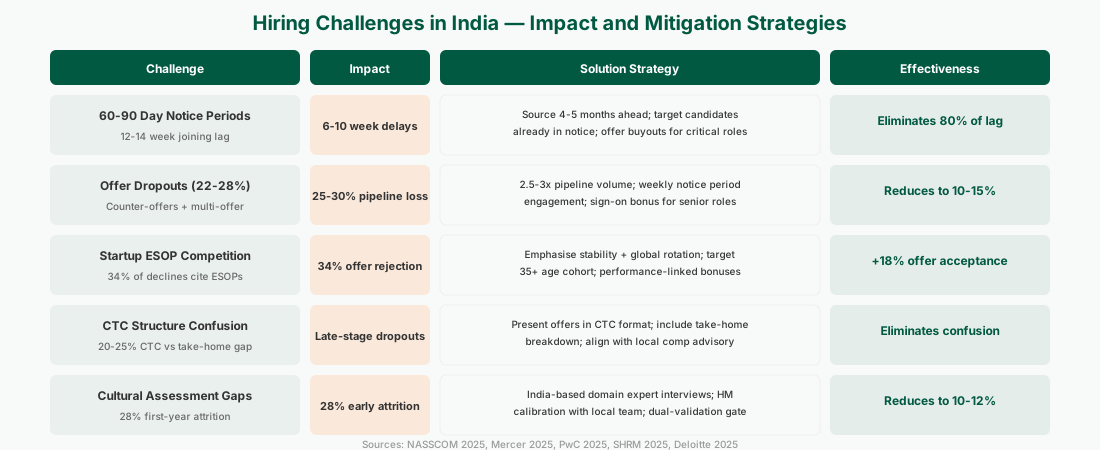
Foreign companies hiring in India face five systemic challenges: 60-90 day notice periods that add 2-3 months of joining lag, offer dropout rates of 20-30%, aggressive startup competition for the same talent pool, CTC structures that confuse Western compensation teams, and cultural assessment gaps that produce mismatched hires. Quantalent AI helps MNCs and GCCs navigate each of these challenges across Bangalore, Hyderabad, Pune, and Chennai — converting common hiring mistakes into repeatable, scalable processes.
Why Do 60-90 Day Notice Periods Derail Foreign Company Hiring Plans?
India's standard notice period of 60-90 days at mid-to-senior levels is the most disruptive challenge for foreign companies accustomed to 2-4 week transitions. According to NASSCOM's 2025 workforce data, 78% of engineers at established IT companies and GCCs have 90-day notice periods — meaning a candidate who accepts an offer today may not start for 12-14 weeks.
Foreign hiring managers consistently underestimate this timeline. A GCC Head planning a Q1 team launch who starts sourcing in December will not have engineers seated until March or April at the earliest. According to the Hays 2026 India Talent Report, 35% of MNCs new to India miss their ramp timelines by 6-10 weeks due to notice period miscalculation.
Mitigation strategies that work. Target candidates already serving their notice period — Quantalent AI's sourcing filters specifically for notice period status, and 15-20% of the active market is in their notice window at any given time. Negotiate notice period buyouts for critical hires (typically INR 1-3 months of salary, funded by the hiring company). Source from product startups and smaller firms where 30-day notice periods are standard. Most importantly, start sourcing 4-5 months before you need engineers seated — not 2 months.
How Do You Handle 20-30% Offer Dropout Rates in India?
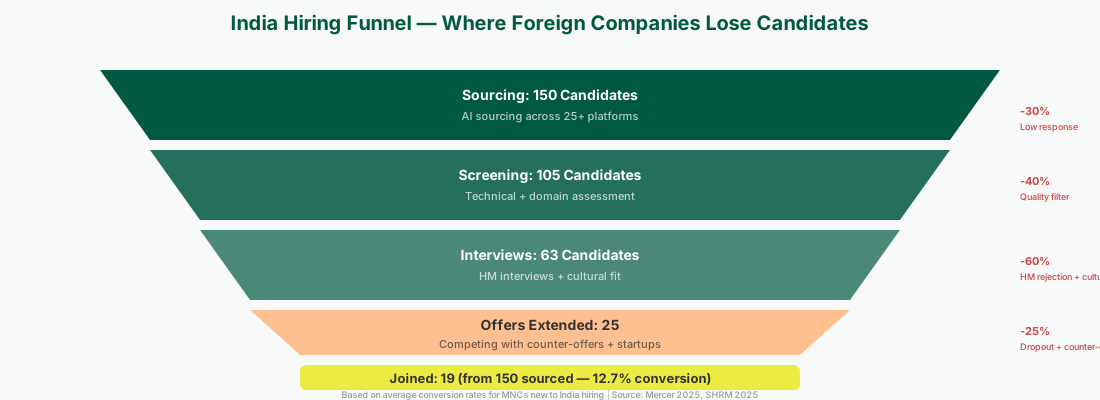
Offer dropouts are the second most costly challenge for foreign companies hiring in India. According to Mercer's 2025 India TA Study, the average offer dropout rate for tech roles in India is 22-28% — significantly higher than the 8-12% typical in the US or Europe.
Three factors drive India's higher dropout rates. Current employers extend counter-offers in 40% of resignation cases, and 50% of those counter-offers succeed. Candidates accept multiple offers simultaneously (especially at the mid-level) and choose the best option during their notice period. Family decision-making dynamics — particularly for relocation or significant role changes — introduce late-stage objections that didn't surface during interviews.
Build 2.5-3x pipeline volume. For a 50-person hiring target, source and progress at least 125-150 candidates through the pipeline. Structured engagement during the notice period — weekly check-ins, team lunch invitations, access to internal Slack channels, and early project documentation — reduces dropout rates from 25-30% to 10-15% according to SHRM's 2025 India benchmarking data.
How Can Foreign Companies Compete With Indian Startups for Tech Talent?
Funded Indian startups have become the primary competitor for GCC engineering hires — not other GCCs or IT services companies. According to PwC's 2025 India Workforce Study, 34% of engineers who declined GCC offers cited startup ESOP packages as the decisive factor.
The competition is structural, not just about salary. Startups offer 0.1-0.5% equity at Series C+ valuations, translating to INR 50 LPA-2 Cr in paper value. Startups offer faster promotion cycles (12-18 months vs 24-36 months at GCCs). Startups offer broader role scope — a senior engineer at a 200-person startup owns features end-to-end, while the same engineer at a 500-person GCC may work on a narrower slice.
Where GCCs have structural advantages. Guaranteed cash compensation with zero liquidity risk outweighs startup equity for engineers with family financial obligations. International rotation opportunities — 30% of Bangalore GCC engineers rotate internationally within 3 years — are unavailable at most Indian startups. Predictable work schedules matter to engineers over 35: according to LinkedIn's 2025 India Talent Trends, 58% of engineers aged 35-45 rank work-life balance above total compensation.
For detailed salary benchmarking that helps GCCs structure competitive offers against startup packages, see our Bangalore GCC salary analysis.
Why Does CTC Complexity Trip Up Foreign Employers in India?
India's CTC (Cost to Company) structure is fundamentally different from Western compensation models, and foreign employers who don't understand the difference make costly offer mistakes. A headline CTC of INR 30 LPA does not mean the employee receives INR 30 LPA in their bank account.
CTC includes employer-paid components invisible in Western systems: employer PF contribution (12% of base salary), gratuity accrual (4.8% of base), and employer ESI contribution (for employees below the threshold). A ₹30 LPA CTC translates to approximately ₹22-24 LPA in annual take-home pay — a 20-25% difference that surprises candidates if not communicated clearly.
The offer letter mistake. Foreign companies frequently present offers in "annual salary" format, which Indian candidates interpret as CTC (the larger number). When the actual take-home is lower than expected, candidates feel deceived — even if the total compensation is competitive. Quantalent AI's GCC recruitment services include offer structuring advisory that presents compensation in the format Indian candidates expect, preventing misunderstandings that cause late-stage dropouts.
What Cultural Assessment Gaps Lead to Mismatched Hires?
Cultural fit assessment is the most nuanced challenge for foreign companies hiring in India, because the mismatch often doesn't surface until 3-6 months after joining. According to Deloitte's 2025 Global Human Capital Trends, 28% of GCC attrition in the first year is attributed to cultural misalignment rather than technical deficiency.
Three common cultural assessment gaps. Indian candidates tend toward more structured, hierarchical communication styles — a candidate who seems "too agreeable" in interviews may simply be following cultural norms of deference to authority. Technical interviews conducted by headquarters teams often use Western-style open-ended problem framing that disadvantages candidates accustomed to well-defined problem statements. English proficiency assessments miss communication nuances — fluent English doesn't guarantee effective communication across cultural contexts.
Assessment calibration fixes these gaps. Hiring managers based at headquarters should conduct at least 3-5 interviews with the local India team present before calibrating their assessment criteria independently. Domain expert interviews by India-based professionals (a core component of Quantalent AI's dual-validation approach) catch cultural nuances that remote interviews miss.
Key Takeaways
- Start sourcing 4-5 months before you need engineers seated — 60-90 day notice periods cannot be compressed, only planned around
- Build 2.5-3x pipeline volume to absorb 22-28% offer dropout rates — structured notice period engagement cuts dropouts to 10-15%
- Compete with startups on guaranteed cash, international exposure, and work-life balance — not by matching ESOP paper value
- Present offers in CTC format (not "annual salary") to avoid the 20-25% take-home gap that causes late-stage candidate withdrawal
- Calibrate cultural assessments with India-based domain experts before relying on headquarters-conducted remote interviews
Email contact@quantalent.ai or book a free consultation to discuss your India hiring strategy. Quantalent AI has helped 50+ foreign companies navigate these challenges across Bangalore, Hyderabad, Pune, and Chennai.