Retaining tech talent in Dubai in 2026 requires more than competitive salaries — it requires hiring the right people in the first place. According to the Hays 2026 GCC Salary Guide, annual tech turnover in Dubai runs 18-22%, costing companies 1.5-2x an engineer's salary per departure. The most effective retention strategy starts with quality-of-hire: when candidates are vetted for both technical skills and cultural fit — as Quantalent AI's dual-validation process ensures — 90-day attrition drops by 40% compared to resume-only hiring.
What Is Driving Tech Attrition in Dubai?
Dubai's tech talent market has a structural retention problem. With 2.5 open positions for every qualified candidate, engineers receive recruiter messages weekly. According to LinkedIn's 2025 Talent Trends report for the Middle East, 67% of tech professionals in the UAE are open to new opportunities at any given time — the highest of any profession in the region.
The top five reasons tech employees leave Dubai companies:
1. Below-market compensation. Tech salaries in Dubai rose 8-12% year-over-year, but most companies budget 3-5% annual increases. After two years without market adjustment, an engineer earning AED 30,000/month is underpaid by AED 3,000-5,000 — enough to trigger job searching.
2. No career growth path. Engineers who can't see a promotion path within 18-24 months start looking externally. Flat organisations without engineering levels (junior, mid, senior, staff, principal) lose mid-career talent fastest.
3. Poor management. According to Gallup's 2025 State of the Global Workplace report, 70% of the variance in employee engagement is determined by the direct manager. A brilliant engineer under a weak manager will leave within 12 months.
4. Lack of technical challenge. Senior engineers who joined to build products but spend their time in meetings and maintenance mode disengage quickly. The best engineers want to solve hard problems — when the problems dry up, so does their motivation.
5. Better remote options. Dubai-based engineers can now work for US and European companies remotely while living in the UAE tax-free, earning 30-50% more than local employers pay.
How to Build a Compensation Strategy That Retains Engineers
Competitive pay is necessary but not sufficient for retention. The companies with the lowest tech attrition in Dubai structure compensation deliberately.
Benchmark against current market data
Using 2024 salary benchmarks to set 2026 compensation means your best engineers are already underpaid. According to Robert Half's 2026 Middle East Salary Guide, companies that benchmark salaries quarterly retain 23% more employees than those that review annually.
Quantalent AI provides real-time salary benchmarking based on actual placement data. When your senior backend developer's market rate has moved from AED 30,000 to AED 34,000/month, you need to know — before a recruiter tells your engineer.
Structure packages for retention, not just attraction
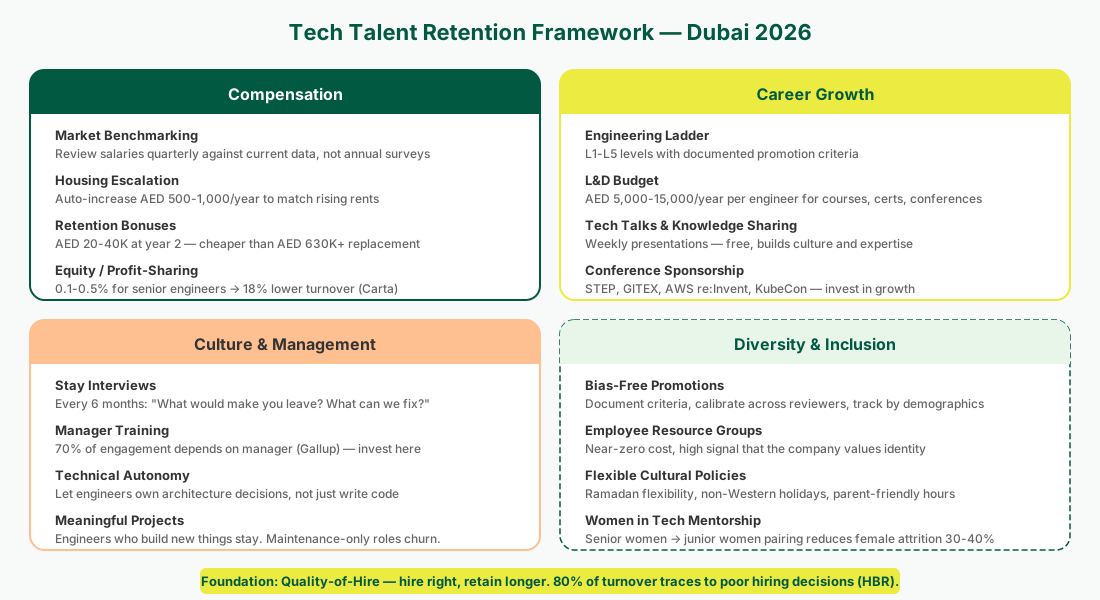
Housing allowance escalation. Increase housing allowance by AED 500-1,000/year automatically. Housing costs in Dubai rise annually — if the allowance doesn't, the employee's real compensation decreases.
Retention bonuses. A one-time AED 20,000-40,000 bonus at the 2-year mark is cheaper than the AED 630,000+ cost of replacing a senior engineer. Structure it as a loyalty bonus, not a handcuff — employees who feel trapped perform worse.
Equity or profit-sharing. Startups should offer meaningful equity (0.1-0.5% for senior engineers). Established companies can offer annual profit-sharing tied to company performance. According to the Carta 2025 Equity Benchmarking Report, companies offering equity to engineers below VP level experience 18% lower turnover than those offering cash-only compensation.
Pay attention to the total package
Many Dubai engineers undervalue their total compensation because they focus on base salary. Proactively communicate the full value: base + housing + bonus + flight tickets + insurance + gratuity accrual. A total compensation statement showing AED 600,000+ in annual value reframes the conversation when a recruiter pitches a higher base salary.
Why Career Growth Is the Strongest Retention Lever
Compensation prevents dissatisfaction, but career growth drives engagement. According to LinkedIn's 2025 Workplace Learning Report, employees who feel they're growing are 3.5x more likely to report being engaged — and engaged employees are 87% less likely to leave.
Build an engineering career ladder
Define clear levels with specific criteria. A framework that works for Dubai tech companies:
| Level | Title | Years (typical) | Key Criteria |
|---|---|---|---|
| L1 | Junior Engineer | 0-2 | Completes tasks with guidance, learns codebase |
| L2 | Mid-Level Engineer | 2-5 | Independently delivers features, mentors L1s |
| L3 | Senior Engineer | 5-8 | Designs systems, makes architectural decisions |
| L4 | Staff Engineer | 8-12 | Cross-team technical leadership, sets standards |
| L5 | Principal Engineer | 12+ | Company-wide technical strategy, external influence |
Each level should have a documented rubric covering technical skills, leadership, and business impact. Engineers should know exactly what they need to demonstrate for promotion — no guessing, no politics.
Invest in learning and development
Allocate AED 5,000-15,000 per engineer annually for conferences, courses, certifications, and books. According to the Josh Bersin Company's 2025 HR Predictions report, companies that invest more than 1% of payroll in learning and development experience 24% higher retention than those that invest less.
Practical learning initiatives that Dubai tech companies use effectively:
- Weekly tech talks where engineers present to each other (free, builds culture)
- Conference attendance at regional events (STEP Conference Dubai, GITEX) and global events (AWS re:Invent, KubeCon)
- Certification sponsorship for AWS, GCP, Azure, and domain-specific credentials
- 20% time for engineers to work on internal tools or explore new technologies
How Diversity and Inclusion Drive Retention in Dubai
Dubai's tech workforce is already diverse by nationality — teams routinely include engineers from India, Pakistan, Egypt, the UK, Russia, and the Philippines working together. But demographic diversity alone doesn't drive retention. Inclusion does.
The retention impact of inclusion
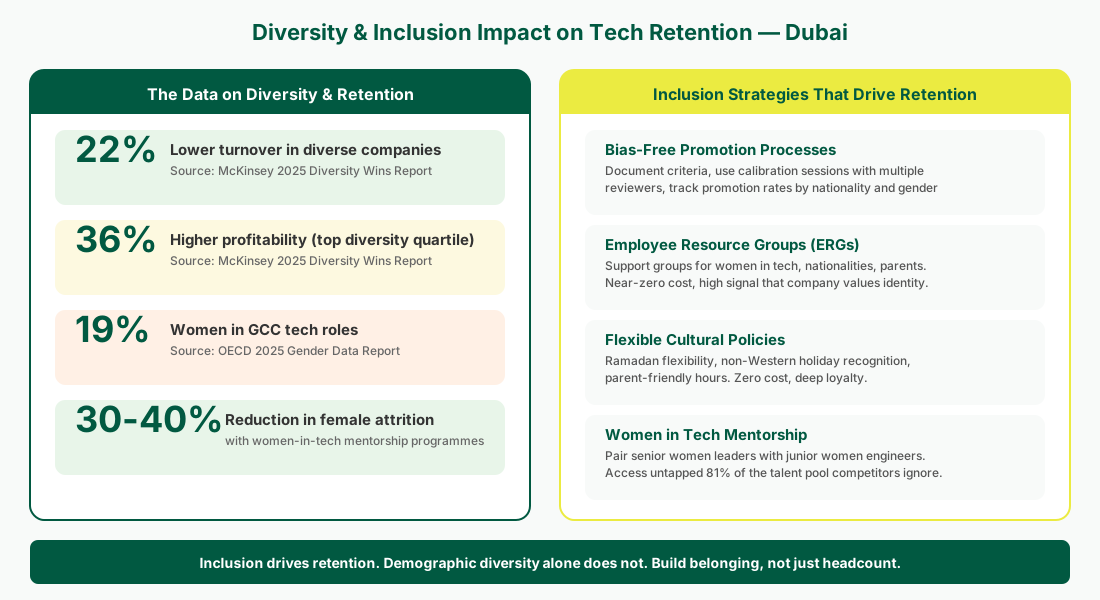
According to McKinsey's 2025 Diversity Wins report, companies in the top quartile for ethnic diversity are 36% more likely to outperform on profitability, and their employee turnover is 22% lower. In Dubai specifically, inclusion practices determine whether engineers from different backgrounds feel they genuinely belong or merely tolerate the workplace.
Practical inclusion strategies for Dubai tech companies
Bias-free promotion processes. Document promotion criteria, use calibration sessions with multiple reviewers, and track promotion rates by nationality and gender. If engineers from certain backgrounds are consistently passed over, the data will reveal it.
Employee resource groups (ERGs). Support groups for women in tech, specific nationalities, parents, and other communities. ERGs cost almost nothing to run but signal that the company values each employee's identity.
Flexible policies that respect diversity. Remote work during Ramadan for Muslim employees. Flexible hours for parents during school pickup. Recognition of non-Western holidays. These accommodations cost nothing but build deep loyalty.
Women in tech hiring and retention. According to the OECD's 2025 Gender Data report, women hold only 19% of tech roles in the GCC. Companies that actively recruit and retain women engineers gain access to a talent pool that competitors are ignoring. Mentorship programmes pairing senior women leaders with junior women engineers reduce female attrition by 30-40%.
Inclusive hiring as the foundation
Retention starts at hiring. When recruitment processes evaluate cultural values alignment rather than cultural background similarity, teams are more diverse from day one. Quantalent AI's dual-validation approach assesses candidates for technical capability and values fit — not nationality, accent, or educational pedigree — ensuring teams are built on merit and complementary strengths.
Why Quality-of-Hire Is the Best Retention Strategy
The most overlooked retention strategy is hiring better. According to the Harvard Business Review's 2025 Talent Management report, 80% of employee turnover is attributed to poor hiring decisions. An engineer who was hired based on resume keywords but wasn't assessed for system design ability, communication style, or team compatibility will underperform and leave — usually within 12 months.
Quantalent AI's approach directly addresses this. Every candidate passes through AI assessment across 200+ technical parameters plus evaluation by a domain expert who has built production systems in the candidate's technology area. The result is a 3:1 interview-to-hire ratio — meaning clients hire well-matched candidates who stay, not just candidates who interviewed well.
Companies using Quantalent AI for tech recruitment in Dubai report lower 90-day attrition because candidates are pre-validated for both technical skills and team fit before they ever reach the interview stage.
"Quantalent transformed our recruitment by engaging passive talent. Their outreach and precise matching turned overlooked professionals into valuable, active contributors." — Saiteja Veera, CEO, Gamyam
Building Your Retention Playbook
Compensation: Benchmark quarterly, escalate housing allowance annually, offer retention bonuses at year 2, provide equity or profit-sharing.
Career growth: Build a documented engineering ladder, invest AED 5,000-15,000/year per engineer in learning, run weekly tech talks, sponsor conference attendance.
Culture: Conduct stay interviews every 6 months, train managers on engineering leadership, give engineers ownership of meaningful technical problems.
Diversity and inclusion: Document promotion criteria, support ERGs, implement flexible cultural policies, actively recruit and mentor women in tech.
Quality-of-hire: Use structured technical assessment and cultural fit evaluation at the hiring stage — the highest-ROI retention investment you can make.
Ready to Hire Engineers Who Stay?
The best retention strategy starts with hiring the right people. Quantalent AI's dual-validation process ensures every candidate is assessed for technical excellence and cultural alignment — reducing attrition before it starts.
Get started: Email contact@quantalent.ai or book a free consultation. We'll share how our assessment approach delivers candidates who perform and stay.